Looking for the best CRM software for small business? You’re not alone. With so many options, choosing the right one can feel overwhelming. Let’s cut through the noise and find the perfect fit to boost your sales, streamline workflows, and grow smarter.
Why the Best CRM Software for Small Business Is a Game-Changer

Customer Relationship Management (CRM) systems are no longer exclusive to large corporations. Today, small businesses can leverage powerful, affordable tools to manage customer interactions, automate tasks, and gain valuable insights. The right CRM can be the difference between stagnation and scalable growth.


What Is a CRM and Why Does It Matter?
A CRM is a software platform designed to help businesses manage all aspects of customer relationships—from initial contact to long-term retention. It centralizes customer data, tracks interactions, and automates follow-ups, making it easier to nurture leads and close deals.
- Stores contact details, communication history, and purchase behavior.
- Tracks leads and opportunities through the sales pipeline.
- Enables personalized marketing and customer service.
For small businesses, a CRM eliminates the chaos of spreadsheets and sticky notes, replacing them with a structured, data-driven approach.
Key Benefits for Small Businesses
Adopting the best CRM software for small business brings tangible advantages:
- Improved Sales Efficiency: Automate lead tracking and follow-ups to reduce missed opportunities.
- Better Customer Retention: Understand customer needs and deliver personalized experiences.
- Enhanced Team Collaboration: Share customer insights across departments in real time.
- Data-Driven Decisions: Access reports and analytics to refine strategies.
- Scalability: Grow your operations without outgrowing your tools.
“A CRM isn’t just a database—it’s the central nervous system of your customer-facing operations.” — HubSpot
Top 7 Best CRM Software for Small Business in 2024
After extensive research, testing, and user feedback analysis, we’ve compiled a list of the 7 best CRM software for small business. Each tool offers unique strengths, pricing models, and integrations to suit different business needs.
1. HubSpot CRM
HubSpot CRM is often hailed as the best CRM software for small business due to its powerful free tier, intuitive interface, and seamless integration with marketing, sales, and service tools.
- Free Plan: Includes contact management, email tracking, deal pipelines, and live chat.
- Pros: Extremely user-friendly, excellent onboarding, strong automation features.
- Cons: Advanced features require paid upgrades; reporting is limited in the free version.
HubSpot’s ecosystem grows with your business. As your needs expand, you can upgrade to Sales Hub, Marketing Hub, or Service Hub. Its integration with Gmail and Outlook makes it ideal for teams already using Google Workspace.
Learn more: HubSpot CRM Official Site
2. Zoho CRM
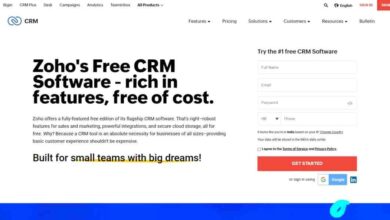
Zoho CRM stands out for its affordability, customization, and AI-powered assistant, Zia. It’s a top contender among the best CRM software for small business owners who want flexibility without breaking the bank.
- Pricing: Starts at $14/user/month; free plan for up to 3 users.
- Pros: Highly customizable, strong automation, excellent mobile app.
- Cons: Interface can feel cluttered; learning curve for advanced features.
Zoho CRM offers industry-specific templates for real estate, retail, and education. Its AI capabilities help predict deal closures, suggest next steps, and automate data entry—making it a smart choice for growing teams.
best crm software for small business – Best crm software for small business menjadi aspek penting yang dibahas di sini.
Explore Zoho CRM: Zoho CRM Official Page
3. Salesforce Essentials
Salesforce, a giant in the CRM world, offers Salesforce Essentials—a streamlined version tailored for small businesses. It brings enterprise-grade power to smaller teams.
- Pricing: $25/user/month.
- Pros: Robust reporting, excellent third-party integrations, scalable architecture.
- Cons: Can be overkill for very small teams; higher price point than competitors.
Salesforce Essentials includes lead and opportunity management, email integration, and mobile access. It’s ideal for businesses planning rapid growth and those already using other Salesforce products.
Visit: Salesforce Essentials
4. Freshsales (by Freshworks)
Freshsales is a modern, AI-driven CRM that’s perfect for sales-focused small businesses. It’s known for its clean design and built-in phone and email features.
- Pricing: Free plan available; paid plans start at $15/user/month.
- Pros: Built-in calling and email, AI-based lead scoring, intuitive UI.
- Cons: Limited third-party integrations compared to HubSpot or Salesforce.
Freshsales’ AI assistant, Freddy, helps prioritize leads and predicts which deals are most likely to close. The visual timeline view shows all customer interactions in one place, making it easy to stay informed.
Check it out: Freshsales CRM
5. Insightly
Insightly combines CRM with project management, making it a powerful choice for service-based businesses like consultants, contractors, and agencies.
- Pricing: Starts at $29/user/month; free trial available.
- Pros: Project tracking, relationship linking, workflow automation.
- Cons: Higher entry cost; limited free features.
One of Insightly’s standout features is its ability to link contacts, projects, and tasks. This is invaluable for businesses managing client deliverables and timelines. It integrates well with G Suite, Microsoft 365, and Mailchimp.
Learn more: Insightly CRM
6. Pipedrive
Pipedrive is built for sales teams that want a visual, pipeline-first approach. It’s one of the best CRM software for small business owners who prioritize sales process clarity.
best crm software for small business – Best crm software for small business menjadi aspek penting yang dibahas di sini.
- Pricing: Starts at $14.90/user/month; 14-day free trial.
- Pros: Visual sales pipeline, easy to use, strong automation.
- Cons: Limited marketing features; not ideal for service-heavy businesses.
Pipedrive’s drag-and-drop interface makes it easy to move deals through stages. It offers email integration, activity reminders, and reporting tools. Its strength lies in simplicity and focus—perfect for small sales teams.
Explore: Pipedrive CRM
7. Agile CRM
Agile CRM offers an all-in-one solution with marketing, sales, and service features. It’s a budget-friendly option for startups and solopreneurs.
- Pricing: Free plan for up to 10 users; paid plans from $9.99/user/month.
- Pros: Affordable, includes marketing automation, website tracking.
- Cons: Interface feels outdated; customer support can be slow.
Agile CRM includes features like email campaigns, web analytics, and helpdesk tools. While not as polished as HubSpot or Zoho, it packs a lot of value for the price.
Visit: Agile CRM
Key Features to Look for in the Best CRM Software for Small Business
Not all CRMs are created equal. To find the best CRM software for small business, focus on features that align with your goals and workflows.
1. Contact and Lead Management
The foundation of any CRM is its ability to store and organize customer data. Look for tools that allow you to:
- Import contacts from email, spreadsheets, or social media.
- Tag and segment contacts by behavior, location, or value.
- Track lead sources and assign ownership.
Effective lead management ensures no prospect falls through the cracks.
2. Sales Pipeline and Automation
A visual sales pipeline helps teams understand where each deal stands. Automation features like task reminders, follow-up emails, and deal stage updates save time and improve consistency.
- Drag-and-drop pipeline stages.
- Automated workflows for repetitive tasks.
- Deal forecasting and win probability analysis.
Tools like Pipedrive and Zoho CRM excel in this area.
3. Integration Capabilities
Your CRM should work seamlessly with other tools you use daily:
best crm software for small business – Best crm software for small business menjadi aspek penting yang dibahas di sini.
- Email platforms (Gmail, Outlook).
- Calendar apps (Google Calendar, Outlook Calendar).
- Marketing tools (Mailchimp, Facebook Ads).
- Phone and VoIP systems (Zoom, RingCentral).
HubSpot and Salesforce lead the pack with thousands of integrations via their marketplaces.
How to Choose the Best CRM Software for Small Business
Selecting the right CRM isn’t just about features—it’s about fit. Follow this step-by-step guide to make an informed decision.
1. Define Your Business Needs
Ask yourself:
- Are you focused on sales, marketing, or customer service?
- How many team members will use the CRM?
- Do you need mobile access or offline functionality?
- What’s your budget?
A solopreneur might thrive on Agile CRM’s free plan, while a growing agency may need Insightly’s project management features.
2. Evaluate Ease of Use
A powerful CRM is useless if your team won’t use it. Prioritize intuitive design and minimal training requirements.
- Look for clean dashboards and simple navigation.
- Check if onboarding resources (tutorials, webinars) are available.
- Test the mobile app if your team works remotely.
HubSpot and Freshsales are known for their user-friendly interfaces.
3. Consider Scalability and Future Growth
Choose a CRM that can grow with you. Ask:
- Can you add users easily?
- Are there higher-tier plans with advanced features?
- Does the platform support automation and AI as you scale?
Salesforce Essentials and Zoho CRM offer clear upgrade paths for expanding teams.
Common Mistakes to Avoid When Implementing CRM
Even the best CRM software for small business can fail if implemented poorly. Avoid these common pitfalls.
1. Poor Data Migration
Transferring data from spreadsheets or old systems can lead to duplicates, errors, or lost information.
- Clean your data before importing—remove duplicates and outdated entries.
- Use CSV import tools with validation checks.
- Test with a small dataset first.
Many CRMs offer migration services or partner with third-party tools like Zapier for smooth transitions.
best crm software for small business – Best crm software for small business menjadi aspek penting yang dibahas di sini.
2. Lack of Team Training
Without proper training, your team may underuse or misuse the CRM.
- Provide hands-on training sessions.
- Assign a CRM champion to answer questions.
- Use in-app tutorials and knowledge bases.
HubSpot Academy offers free CRM training—take advantage of it.
3. Over-Customization
While customization is powerful, too much can complicate the system and reduce adoption.
- Start with default settings and basic workflows.
- Customize only what’s necessary for your sales process.
- Review and simplify workflows regularly.
Remember: simplicity drives consistency.
How the Best CRM Software for Small Business Boosts Productivity
A well-implemented CRM doesn’t just organize data—it transforms how your team works.
1. Automates Repetitive Tasks
From sending follow-up emails to logging calls, automation frees up time for high-value activities.
- Schedule email sequences based on customer behavior.
- Automatically assign leads to sales reps.
- Set reminders for follow-ups and renewals.
Zoho CRM’s workflow rules and HubSpot’s automation templates make this effortless.
2. Enhances Customer Insights
CRMs aggregate data from multiple touchpoints, giving you a 360-degree view of each customer.
- Track email opens, link clicks, and website visits.
- See purchase history and support tickets in one place.
- Use AI to predict customer needs and churn risk.
Freshsales’ timeline view and Salesforce’s Einstein Analytics provide deep insights.
3. Improves Sales Forecasting
With accurate data on deal stages and win probabilities, you can forecast revenue more reliably.
- Generate pipeline reports by stage, owner, or value.
- Identify bottlenecks in your sales process.
- Adjust strategies based on real-time data.
Pipedrive’s forecasting tools and Zoho’s AI predictions help small businesses plan with confidence.
best crm software for small business – Best crm software for small business menjadi aspek penting yang dibahas di sini.
Real-World Success Stories: Small Businesses Using CRM
Don’t just take our word for it—here are real examples of small businesses thriving with the best CRM software for small business.
Case Study 1: Local Marketing Agency
A 10-person digital marketing agency in Austin switched from spreadsheets to HubSpot CRM. Within six months:
- Sales cycle shortened by 30%.
- Client retention increased by 25%.
- Team collaboration improved with shared task lists and notes.
The agency credits HubSpot’s automation and integration with Gmail for the turnaround.
Case Study 2: E-commerce Startup
An online fashion brand with 5 employees used Zoho CRM to manage customer inquiries, orders, and marketing campaigns. Results after one year:
- Customer response time dropped from 12 hours to under 2.
- Email campaign ROI increased by 40%.
- Sales grew by 60% due to better lead nurturing.
Zoho’s AI assistant helped prioritize high-value leads, boosting conversion rates.
Case Study 3: Home Services Contractor
A plumbing company with 8 technicians adopted Insightly to manage jobs, schedules, and customer relationships. Outcomes included:
- Reduced scheduling conflicts by 50%.
- Improved customer satisfaction scores by linking service history to contacts.
- Increased repeat business through automated follow-up emails.
The project management features allowed them to track job progress and materials used per client.
Future Trends in CRM for Small Businesses
The best CRM software for small business is evolving fast. Stay ahead by understanding emerging trends.
1. AI and Predictive Analytics
AI is no longer a luxury. CRMs are using machine learning to:
- Predict which leads will convert.
- Suggest optimal times to contact customers.
- Automate data entry and categorization.
Freshsales’ Freddy and Salesforce’s Einstein are leading this shift.
2. Mobile-First CRM Design
With remote work on the rise, mobile CRM access is essential. Expect more apps with offline mode, voice input, and real-time sync.
best crm software for small business – Best crm software for small business menjadi aspek penting yang dibahas di sini.
- Zoho and HubSpot offer robust mobile experiences.
- Features like GPS check-ins and mobile calling are becoming standard.
Mobile CRM empowers field sales and service teams to stay connected.
3. Integration with Communication Platforms
CRMs are merging with tools like Slack, Microsoft Teams, and WhatsApp.
- Receive CRM alerts in Slack channels.
- Log WhatsApp messages directly to contact records.
- Start video calls from within the CRM.
This reduces app switching and keeps communication centralized.
What is the best CRM software for small business?
The “best” CRM depends on your specific needs. For ease of use and free access, HubSpot CRM is excellent. For customization and AI, Zoho CRM stands out. For sales-focused teams, Pipedrive is ideal. Evaluate your goals, team size, and budget to make the right choice.
Is a CRM worth it for a small business?
Absolutely. A CRM helps small businesses compete with larger companies by improving efficiency, customer service, and sales performance. Even solopreneurs benefit from organized contact management and automated follow-ups.
Can I use CRM software for free?
Yes, several top CRMs offer free plans. HubSpot CRM, Zoho CRM (for up to 3 users), and Agile CRM provide robust free tiers with essential features. These are perfect for startups and small teams testing the waters.
How long does it take to implement a CRM?
Implementation time varies. Simple CRMs like HubSpot can be up and running in a day. More complex systems may take 1–2 weeks, including data migration and training. Using free trials and onboarding resources speeds up the process.
best crm software for small business – Best crm software for small business menjadi aspek penting yang dibahas di sini.
Do I need IT support to set up a CRM?
Most modern CRMs are designed for non-technical users. You can typically set up accounts, import data, and start using core features without IT help. However, for complex integrations or custom workflows, consulting a specialist may be beneficial.
Choosing the best CRM software for small business is a strategic decision that can transform your operations. From HubSpot’s user-friendly interface to Zoho’s powerful automation, the right tool will streamline sales, enhance customer relationships, and drive growth. Consider your needs, test free trials, and involve your team in the decision. With the right CRM, your small business won’t just survive—it will thrive.
Recommended for you 👇
Further Reading: