Want to explore the cloud without spending a dime? The AWS Free Tier is your golden ticket to experimenting with Amazon’s powerful cloud services—risk-free and packed with value.
What Is the AWS Free Tier?

The AWS Free Tier is Amazon Web Services’ initiative to help new users get hands-on experience with its cloud platform at no cost. It’s not just a trial; it’s a structured program offering real usage of dozens of services for free, either for a limited time or indefinitely. Whether you’re a student, developer, startup founder, or just cloud-curious, the AWS Free Tier gives you the freedom to learn, build, and scale without upfront investment.

Types of Free Tier Offers
AWS structures its free offerings into three distinct categories, ensuring flexibility and long-term value for different user needs. Understanding these types helps you maximize your free usage and avoid unexpected charges.
Always Free: Certain services, like AWS Lambda and Amazon DynamoDB, offer limited usage completely free, forever.This is ideal for low-traffic applications or learning.12-Month Free: Most popular services, such as EC2, S3, and RDS, come with free usage limits for the first 12 months after account creation.Short-Term Trials: Some advanced services, like Amazon Connect or AWS Glue, offer free trials for a few months to test specific features.Eligibility and Account RequirementsTo access the AWS Free Tier, you must create a new AWS account with valid payment information..
Yes, you need a credit card, but you won’t be charged as long as you stay within the free usage limits.AWS verifies your identity and billing method to prevent abuse, but no fees are incurred during compliant usage..
“The AWS Free Tier lowers the barrier to entry for cloud computing, enabling innovation from individuals and startups alike.” — AWS Official Documentation
Eligibility is limited to new AWS customers. Once your 12-month period begins, it runs continuously for a year, regardless of usage. You can’t pause or extend it, so it’s wise to start when you’re ready to begin building.
Top 10 AWS Free Tier Services You Should Try
The AWS Free Tier includes over 60 services, but some are more impactful than others for learning and development. Here are the top 10 services that offer the most value and versatility for beginners and intermediate users.
Amazon EC2 (Elastic Compute Cloud)
Amazon EC2 is the cornerstone of AWS compute services. Under the Free Tier, you get 750 hours per month of t2.micro or t3.micro instances (Linux or Windows) for the first 12 months. This is enough to run a small web server, experiment with operating systems, or host a personal project.
With EC2, you can launch virtual servers in minutes, choose your OS, and configure networking and security settings. It’s perfect for learning cloud infrastructure, deploying a WordPress site, or testing application environments.
Learn more about EC2 Free Tier: AWS EC2 Pricing
Amazon S3 (Simple Storage Service)
Amazon S3 offers scalable object storage. The Free Tier includes 5 GB of standard storage, 20,000 GET requests, and 2,000 PUT requests per month for 12 months. This is ideal for storing backups, static website assets, or user uploads.
S3 is widely used for data lakes, mobile app backends, and content delivery. The free tier lets you explore bucket creation, access policies, lifecycle rules, and versioning without cost.
Explore S3 Free Tier details: AWS S3 Pricing
Amazon RDS (Relational Database Service)
Amazon RDS simplifies database management. The Free Tier provides 750 hours per month of a db.t3.micro instance for MySQL, PostgreSQL, MariaDB, Oracle, or SQL Server. You also get 20 GB of General Purpose (SSD) storage and 20 million I/Os.
This is perfect for running a backend database for a web application. You can connect it to your EC2 instance or use it with serverless applications. RDS handles backups, patching, and failover, reducing operational overhead.
AWS Lambda
AWS Lambda is a serverless compute service that runs your code in response to events. It’s part of the Always Free tier, offering 1 million free requests and 400,000 GB-seconds of compute time per month—forever.
This makes Lambda ideal for microservices, automation scripts, and event-driven architectures. For example, you can trigger a Lambda function when a file is uploaded to S3, process it, and store the result elsewhere—all without managing servers.
Amazon DynamoDB
DynamoDB is a NoSQL database that delivers single-digit millisecond performance at any scale. It’s also Always Free, with 25 GB of storage and 25 units of write capacity and 25 units of read capacity per month.
It’s great for mobile apps, gaming backends, and IoT applications. The free tier allows you to build and test real-time applications without worrying about database costs.
Amazon CloudFront
CloudFront is AWS’s content delivery network (CDN). The Free Tier includes 1 TB of data transfer out to the internet and 10 million HTTP/HTTPS requests per month for 12 months.
This is excellent for accelerating website performance globally. You can integrate it with S3 to serve static content like images, videos, and CSS files from edge locations closer to your users.
Amazon Route 53
Route 53 is a scalable DNS web service. The Free Tier includes 1000 DNS queries, 10 hosted zones, and 25 health checks per month for 12 months.
It allows you to register domain names, route traffic, and monitor endpoint health. While limited, it’s enough to manage a personal website or small project’s DNS needs.
AWS Identity and Access Management (IAM)
IAM is always free and essential for securing your AWS environment. It lets you create and manage users, groups, and permissions.
Although not a compute or storage service, IAM is critical for following security best practices. Use it to grant least-privilege access and avoid using the root account for daily tasks.
aws free tier – Aws free tier menjadi aspek penting yang dibahas di sini.
Amazon VPC (Virtual Private Cloud)
VPC is always free and allows you to launch AWS resources into a virtual network you define. You can create subnets, route tables, and security groups.
The Free Tier includes unlimited VPCs, subnets, and internet gateways. This is crucial for isolating resources, setting up private networks, and practicing network security.
AWS Cloud9
Cloud9 is a cloud-based integrated development environment (IDE). The Free Tier includes 750 hours per month of t3.micro instance usage for 12 months.
It supports multiple programming languages and integrates with AWS services. You can write, run, and debug code directly in the browser, making it perfect for learning and collaboration.
How to Sign Up for the AWS Free Tier
Getting started with the AWS Free Tier is straightforward, but it’s important to follow the correct steps to ensure you qualify and avoid accidental charges.
Step-by-Step Registration Process
1. Go to aws.amazon.com and click “Create an AWS Account.”
2. Enter your email, AWS account name, and password.
3. Provide your personal or business information, including name, address, and phone number.
4. Enter a valid credit card for identity verification. AWS will make a small temporary authorization charge (usually reversed within a few days).
5. Choose a support plan (Basic is free).
6. Complete the identity verification process, which may include a phone call to confirm your identity.
7. Once verified, you’ll gain access to the AWS Management Console and the Free Tier.
After registration, you can immediately start launching free tier-eligible services. AWS automatically applies free usage limits to your account for the next 12 months.
Verifying Your Free Tier Eligibility
After signing up, you can confirm your Free Tier status by visiting the Billing & Cost Management Dashboard. Here, you’ll see a summary of your current usage and which services are covered under the Free Tier.
Navigate to the Cost Explorer or Free Tier section to view your remaining free usage. AWS provides detailed breakdowns by service, helping you track your consumption and avoid overages.
“AWS does not automatically notify you when your 12-month Free Tier is about to expire. It’s your responsibility to monitor the timeline.” — AWS Support Guidelines
Best Practices to Maximize Your AWS Free Tier
To get the most out of the AWS Free Tier without incurring charges, follow these proven strategies and operational best practices.
Monitor Usage with AWS Budgets
AWS Budgets allows you to set custom cost and usage alerts. Create a budget that notifies you when you’re approaching your free tier limits.
For example, set a budget for EC2 hours to alert you when you’ve used 700 of the 750 free hours. This prevents accidental overages that could lead to charges.
Set up budgets via the AWS Console: AWS Budgets
Use AWS Trusted Advisor
AWS Trusted Advisor is a monitoring tool that provides real-time guidance to optimize your AWS infrastructure. The free version includes checks for cost optimization, performance, security, and fault tolerance.
It can identify underutilized resources, unused Elastic IPs, or unattached EBS volumes—all of which can lead to unnecessary charges. Regularly review Trusted Advisor recommendations to stay within the Free Tier.
Terminate Unused Resources
One of the most common causes of unexpected charges is leaving resources running after you’re done with them. Always terminate EC2 instances, delete S3 buckets, and remove RDS databases when not in use.
For example, if you launch an EC2 instance for a weekend project, remember to stop or terminate it afterward. A running instance, even if idle, consumes your free hours and can lead to charges once the limit is exceeded.
Common Mistakes to Avoid on AWS Free Tier
Many new users unknowingly exceed their Free Tier limits due to simple oversights. Avoid these common pitfalls to keep your AWS experience truly free.
Running EC2 Instances 24/7 Without Monitoring
The 750 free EC2 hours per month equate to running one instance continuously (24/7). However, if you launch multiple instances or use larger instance types, you’ll exceed the limit quickly.
For example, running two t3.micro instances simultaneously uses 1,500 hours per month—double the free allowance. Always check your instance count and usage in the EC2 dashboard.
Storing Too Much Data in S3
While 5 GB of S3 storage seems generous, uploading large files like videos or database backups can quickly consume it. Additionally, data transfer costs apply if you exceed free tiers or transfer data between regions.
Regularly audit your S3 buckets and delete unnecessary files. Use lifecycle policies to automatically transition or delete old objects.
Forgetting About Regional Pricing
Some AWS services have different pricing based on region. While the Free Tier applies globally, certain regions may have higher costs for data transfer or specific services.
Always launch resources in the default region (usually us-east-1) unless you have a specific need. This minimizes complexity and ensures compatibility with Free Tier eligibility.
Advanced Tips: Building Real Projects on AWS Free Tier
The AWS Free Tier isn’t just for learning—it can power real, functional applications. Here’s how to build practical projects without spending a cent.
aws free tier – Aws free tier menjadi aspek penting yang dibahas di sini.
Host a Personal Website with S3 and CloudFront
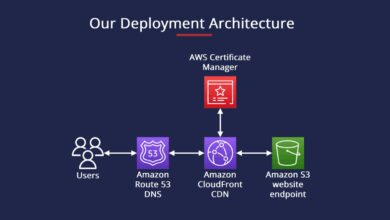
You can host a static website using Amazon S3 and accelerate it with CloudFront. Upload your HTML, CSS, and JavaScript files to an S3 bucket, enable static website hosting, and configure CloudFront to serve content globally.
This setup is perfect for portfolios, blogs, or landing pages. With 5 GB of S3 storage and 1 TB of CloudFront data transfer, your site can handle significant traffic.
Follow AWS’s guide: Host a Static Website on S3
Build a Serverless API with Lambda and API Gateway
Create a REST API using AWS Lambda and API Gateway. The Free Tier includes 1 million Lambda requests and 1 million API calls per month.
For example, build a to-do list API that stores data in DynamoDB. Users can create, read, update, and delete tasks via HTTP endpoints—all running on free-tier services.
This architecture is scalable, secure, and cost-effective, demonstrating real-world serverless development.
Automate Tasks with Event-Driven Workflows
Use S3, Lambda, and SNS to automate file processing. For instance, when a user uploads a CSV file to S3, trigger a Lambda function to parse it, validate data, and send a confirmation email via Amazon SNS.
All components are within the Free Tier, enabling powerful automation without infrastructure costs.
What Happens After 12 Months?
Your 12-month AWS Free Tier doesn’t renew automatically. After the period ends, you’ll be charged standard pay-as-you-go rates for any resources you continue to use.
Managing Costs Post-Free Tier
To avoid bill shock, review your running resources before the 12-month mark. Identify which services you still need and estimate their monthly cost.
For example, a t3.micro EC2 instance costs around $10–$15/month depending on region and usage. S3 storage is $0.023 per GB/month. Use the AWS Pricing Calculator to forecast expenses.
Downgrading or Shutting Down Services
If you no longer need certain services, terminate them before the Free Tier expires. Export any important data, then delete EC2 instances, RDS databases, and S3 buckets.
You can always recreate them later if needed. Alternatively, switch to smaller or free-tier-eligible configurations to minimize costs.
FAQ
Is the AWS Free Tier really free?
Yes, the AWS Free Tier is genuinely free as long as you stay within the usage limits. You need to provide a credit card for verification, but AWS won’t charge you unless you exceed the free allowances.
Can I extend my AWS Free Tier beyond 12 months?
No, the 12-month Free Tier cannot be extended or renewed. However, some services like AWS Lambda and DynamoDB offer perpetual free usage tiers.
Does the Free Tier include all AWS services?
No, only select services are included. Over 60 services are part of the Free Tier, but advanced or specialized services may not be covered. Always check the official AWS Free Tier page for the full list.
What happens if I exceed the Free Tier limits?
If you exceed the limits, AWS will charge you at standard pay-as-you-go rates. These charges appear on your monthly bill, so it’s crucial to monitor your usage.
Can I use the Free Tier for commercial projects?
Yes, you can use the Free Tier for commercial purposes as long as you comply with AWS’s terms of service and stay within usage limits. However, ensure your project doesn’t exceed free allowances to avoid costs.
Wrapping up, the AWS Free Tier is an exceptional opportunity to dive into cloud computing with zero financial risk. From hosting websites to building serverless applications, the free tier empowers innovation and learning. By understanding the services, monitoring usage, and avoiding common mistakes, you can maximize its value and lay a strong foundation for your cloud journey.
aws free tier – Aws free tier menjadi aspek penting yang dibahas di sini.
Further Reading: