Managing cloud costs can feel like navigating a maze—until you discover the AWS Cost Calculator. This powerful tool puts precise forecasting and budget control at your fingertips, helping businesses of all sizes optimize spending without sacrificing performance.
What Is the AWS Cost Calculator and Why It Matters

The AWS Cost Calculator, officially known as the AWS Pricing Calculator, is a free online tool provided by Amazon Web Services (AWS) that allows users to estimate the cost of using AWS services before deployment. Whether you’re planning a small website or a large-scale enterprise application, this tool helps you forecast monthly or annual expenses with remarkable accuracy.



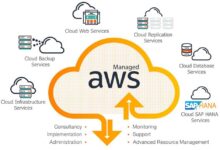

Unlike simple estimators, the AWS Cost Calculator offers granular control over service configurations, regions, usage patterns, and even data transfer costs. It’s designed for developers, architects, finance teams, and decision-makers who need transparency in cloud spending. With cloud budgets often spiraling out of control due to unexpected usage spikes or misconfigured resources, having a reliable estimation tool is no longer optional—it’s essential.
How the AWS Cost Calculator Works
At its core, the AWS Cost Calculator operates on a configuration-based model. You select the AWS services you plan to use—such as EC2 instances, S3 storage, Lambda functions, or RDS databases—and then define their specifications. For example, you can choose an EC2 instance type (like t3.medium), specify how many hours per day it will run, and select the AWS region (e.g., us-east-1).
The calculator then pulls real-time pricing data from AWS’s global infrastructure and applies it to your configuration. It accounts for variables like on-demand vs. reserved instances, data egress fees, and even free tier eligibility. The result is a detailed cost breakdown that can be exported, shared, or revised as your architecture evolves.
Key Features That Set It Apart
What makes the AWS Cost Calculator stand out from other cloud pricing tools is its depth and integration with actual AWS offerings. Some of its standout features include:
Real-time pricing updates: Prices are pulled directly from AWS, ensuring accuracy.Multi-service modeling: You can combine dozens of services in one estimate.Custom usage patterns: Define hourly, daily, or monthly usage with precision.Comparison mode: Compare different architectures side-by-side.Export options: Download estimates as CSV or share via URL.”The AWS Cost Calculator isn’t just about predicting expenses—it’s about empowering teams to make informed architectural and financial decisions before writing a single line of code.” — AWS Solutions ArchitectWhy Accurate Cloud Cost Estimation Is CriticalIn today’s digital economy, cloud computing has become the backbone of innovation.However, the flexibility and scalability of the cloud come with a hidden risk: unpredictable costs..
Without proper planning, a simple proof-of-concept can turn into a six-figure monthly bill.This is where the aws cost calculator becomes a mission-critical tool..
Organizations across industries—from startups to Fortune 500 companies—have faced budget overruns due to unanticipated data transfer fees, idle resources, or over-provisioned instances. A study by Flexera’s 2023 State of the Cloud Report found that 32% of cloud spending is wasted annually, largely due to poor visibility and lack of pre-deployment planning.
Common Causes of Cloud Cost Overruns
Understanding what drives unexpected costs is the first step toward prevention. Here are some of the most frequent culprits:
- Over-provisioning: Launching high-performance instances when smaller ones would suffice.
- Idle resources: Forgotten test environments or orphaned databases running 24/7.
- Data egress fees: Transferring large volumes of data out of AWS regions incurs significant charges.
- Unoptimized storage: Using standard S3 when Glacier or Intelligent-Tiering would be cheaper.
- Lack of reserved instances: Missing out on up to 75% savings by not committing to longer-term usage.
By using the aws cost calculator during the design phase, teams can simulate various scenarios and identify cost traps before they become real expenses.
The Business Impact of Poor Cost Management
Poor cloud cost management doesn’t just affect the IT budget—it can impact entire business strategies. Startups may burn through funding faster than expected, delaying product launches. Enterprises might face scrutiny from CFOs and audit teams. In extreme cases, companies have had to migrate away from AWS entirely due to uncontrollable costs.
Accurate forecasting enables better capital allocation, improves ROI on cloud investments, and supports compliance with financial governance standards. When stakeholders can see a clear cost trajectory, they’re more likely to approve cloud initiatives with confidence.
Step-by-Step Guide to Using the AWS Cost Calculator
Using the aws cost calculator doesn’t require advanced technical skills, but mastering it does take practice. Below is a comprehensive walkthrough to help you build accurate and actionable cost models.
Step 1: Access the AWS Pricing Calculator
Go to the official AWS Pricing Calculator website. No login is required to start building estimates, though signing in allows you to save and share your projects. Once there, you’ll see a clean interface with options to create a new estimate for different workloads like web applications, mobile backends, or data lakes.
Step 2: Choose Your AWS Services
Click “Create estimate” and begin adding services. The calculator categorizes services into groups such as Compute, Storage, Database, Networking, and Analytics. For example:
- Compute: EC2, Lambda, ECS, EKS
- Storage: S3, EBS, Glacier
- Database: RDS, DynamoDB, Redshift
- Networking: Data Transfer, VPC, CloudFront
You can add multiple instances of the same service—for example, three EC2 instances with different configurations.
Step 3: Configure Service Details
This is where precision matters. For each service, you’ll configure specific parameters:
- EC2 Instances: Select instance type, OS, tenancy, purchasing option (on-demand, reserved, or spot), and usage hours.
- S3 Storage: Choose storage class (Standard, IA, Glacier), amount of data, number of requests, and data transfer out.
- RDS: Pick engine (MySQL, PostgreSQL, etc.), instance size, storage type, backup retention, and read replicas.
The more accurate your inputs, the more reliable your estimate.
Step 4: Adjust Usage Patterns and Regions
AWS pricing varies significantly by region. Running an EC2 instance in us-west-2 (Oregon) may cost less than in ap-southeast-1 (Singapore). The calculator lets you select the region for each service, enabling geographic cost optimization.
You can also define usage patterns. For example, a development environment might run only 40 hours per week, while production runs 24/7. Use the “Monthly hours of usage” field to reflect this accurately.
Step 5: Review, Compare, and Export
Once all services are configured, the calculator displays a total estimated monthly cost. You can drill down into each service’s cost breakdown, see which components are the most expensive, and adjust accordingly.
One powerful feature is the ability to create multiple estimates and compare them. For instance, compare an architecture using on-demand instances versus one using reserved instances. Or test the cost difference between using S3 Standard and S3 Intelligent-Tiering.
Finally, export your estimate as a CSV file or generate a shareable link to collaborate with team members or present to stakeholders.
Advanced Strategies for Optimizing AWS Costs
The basic use of the aws cost calculator is valuable, but true cost mastery comes from applying advanced strategies. These techniques go beyond estimation and help you design cost-efficient architectures from the ground up.
Leverage Reserved Instances and Savings Plans
One of the biggest opportunities for savings is committing to long-term usage through Reserved Instances (RIs) or Savings Plans. The aws cost calculator allows you to model these options directly.
For example, if you know you’ll run a t3.large instance continuously for the next three years, selecting the “Reserved” option with a “All Upfront” payment can reduce costs by up to 75% compared to on-demand pricing. Savings Plans offer even greater flexibility, applying discounts across multiple services like EC2, Fargate, and Lambda.
When using the calculator, always toggle between on-demand, reserved, and spot options to see the financial impact. This helps justify long-term commitments to finance teams.
Optimize Data Transfer and Egress Costs
Data transfer is one of the most misunderstood cost factors in AWS. While inbound data is free, outbound data (egress) is charged—sometimes at high rates depending on volume and destination.
The aws cost calculator includes a dedicated “Data Transfer” section where you can estimate costs for:
- Internet egress (e.g., users downloading files from S3)
- VPC-to-VPC traffic across regions
- Transfers to AWS services like CloudFront or Direct Connect
Strategy tip: Use CloudFront as a content delivery network (CDN) to reduce egress costs. The calculator can model this by reducing direct S3-to-internet traffic and adding CloudFront distribution costs, often resulting in net savings.
Use Spot Instances for Fault-Tolerant Workloads
For non-critical, interruptible workloads like batch processing, CI/CD pipelines, or machine learning training, Spot Instances can reduce compute costs by up to 90%. The aws cost calculator lets you model Spot pricing for EC2, ECS, and EKS.
While Spot Instances can be terminated with short notice, they’re ideal for scalable, stateless applications. When building your estimate, consider a hybrid model: use on-demand or reserved instances for core services and Spot for scalable worker nodes.
“We reduced our monthly EC2 bill by 68% just by modeling Spot usage in the AWS Cost Calculator before launch.” — DevOps Lead, SaaS Startup
Common Mistakes to Avoid When Using the AWS Cost Calculator
Even experienced users can make errors that lead to inaccurate estimates. Avoiding these pitfalls ensures your forecasts are reliable and actionable.
Underestimating Data Transfer Costs
Many users focus on compute and storage but overlook data transfer. For example, a video streaming platform might store 10 TB in S3, but if it serves 50 TB of data to global users monthly, egress fees could exceed storage costs.
Solution: Always include data transfer in your estimate. Use realistic traffic projections based on user growth models.
Ignoring Free Tier Limits
The AWS Free Tier offers 12 months of free usage for many services, plus always-free tiers for Lambda, DynamoDB, and S3. The aws cost calculator has a “Free Usage” section where you can input your expected free tier consumption.
Mistake: Not marking usage as “free” when eligible, leading to inflated estimates.
Best Practice: Clearly define which resources fall under free tier limits, especially for startups and proof-of-concept projects.
Failing to Update Estimates Regularly
Cloud architectures evolve. A static cost estimate becomes outdated quickly. Teams often create an initial estimate but never revise it as the application scales.
Solution: Treat your cost model as a living document. Update it monthly or whenever you add new services. The aws cost calculator allows you to save and revise estimates, making this process seamless.
Integrating the AWS Cost Calculator with Other AWS Tools
The aws cost calculator is most powerful when used in conjunction with other AWS cost management and monitoring tools. This creates a complete lifecycle approach—from planning to optimization.
AWS Cost Explorer: From Forecast to Analysis
While the aws cost calculator is used pre-deployment, AWS Cost Explorer is used post-deployment to analyze actual spending. It provides visualizations of your usage patterns, identifies cost trends, and helps detect anomalies.
Integration tip: Use the calculator to set a baseline forecast, then compare it with Cost Explorer data after launch. This feedback loop improves future estimates.
AWS Budgets: Enforcing Financial Controls
AWS Budgets allows you to set custom cost and usage thresholds with alerts. For example, you can receive an email when spending exceeds 80% of your forecasted budget.
Best Practice: Align your AWS Budgets limits with the totals generated in the aws cost calculator. This ensures proactive cost management.
AWS Trusted Advisor: Real-Time Optimization Recommendations
AWS Trusted Advisor provides real-time recommendations for cost optimization, security, fault tolerance, and performance. It can identify underutilized EC2 instances, idle load balancers, or unattached EBS volumes.
Use Case: After launching based on your calculator estimate, run Trusted Advisor to find immediate savings opportunities.
Real-World Use Cases of the AWS Cost Calculator
The true value of the aws cost calculator is best illustrated through real-world applications. Here are three scenarios where it made a significant difference.
Startup Launching a SaaS Platform
A fintech startup planned to launch a cloud-based accounting tool. Using the aws cost calculator, they modeled a stack with EC2 (for backend), RDS (PostgreSQL), S3 (for document storage), and Lambda (for invoice processing).
Initial estimate: $4,200/month. By switching to Reserved Instances for EC2 and RDS, and using S3 Intelligent-Tiering, they reduced the estimate to $1,800/month—a 57% savings before launch.
Enterprise Migrating On-Premises Workloads
A global retailer migrated its e-commerce platform from on-premises data centers to AWS. The IT team used the aws cost calculator to compare multiple migration strategies.
They tested “lift-and-shift” vs. “re-architected” approaches. The re-architected version, which used microservices, DynamoDB, and CloudFront, was 30% cheaper and more scalable. The calculator provided the data needed to secure executive approval.
Educational Institution Running Research Workloads
A university research lab used AWS for genomic data analysis. Their workloads were sporadic but compute-intensive. Using the calculator, they modeled using Spot Instances for batch jobs and S3 Glacier for long-term data archiving.
Result: They achieved 80% cost reduction compared to using on-demand instances and standard storage.
What is the AWS Cost Calculator?
The AWS Cost Calculator is a free online tool that helps users estimate the monthly cost of using AWS services based on their specific configurations, usage patterns, and selected regions.
Is the AWS Cost Calculator accurate?
Yes, it uses real-time pricing data from AWS and allows detailed configuration, making it one of the most accurate estimation tools available. However, actual costs may vary based on usage fluctuations and unanticipated services.
Can I save my estimates in the AWS Cost Calculator?
Yes, if you’re signed in to your AWS account, you can save, edit, and share your cost estimates. This is useful for collaboration and version control.
Does the AWS Cost Calculator include free tier credits?
Yes, it has a dedicated section where you can specify usage that qualifies for the AWS Free Tier, helping startups and developers create realistic low-cost models.
How does the AWS Cost Calculator differ from AWS Cost Explorer?
The AWS Cost Calculator is used for pre-deployment forecasting, while AWS Cost Explorer analyzes actual historical spending. They complement each other in a complete cost management strategy.
Mastering the AWS Cost Calculator is not just about avoiding bill shock—it’s about taking control of your cloud financial strategy. From startups to enterprises, this tool empowers teams to design efficient, scalable, and cost-effective architectures. By combining accurate forecasting with advanced optimization techniques and integration with other AWS tools, organizations can achieve maximum ROI from their cloud investments. Whether you’re planning a simple website or a complex data pipeline, the AWS Cost Calculator should be your first step in the cloud journey.
Further Reading: