Accessing your AWS resources starts with one crucial step: the AWS console login. Whether you’re a developer, sysadmin, or cloud architect, mastering this process ensures seamless, secure, and efficient cloud management. Let’s dive into everything you need to know.
AWS Console Login: The Gateway to Cloud Power

The AWS Management Console is the primary web-based interface for interacting with Amazon Web Services. It allows users to manage services like EC2, S3, Lambda, and RDS through a graphical user interface. The aws console login is your first interaction with this powerful ecosystem.

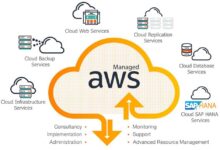
What Is the AWS Management Console?
The AWS Management Console is a centralized dashboard that provides access to over 200 AWS services. It’s designed for ease of use, offering visual tools, monitoring dashboards, and configuration wizards. Unlike command-line tools or APIs, the console is ideal for beginners and those who prefer point-and-click navigation.
- Provides a user-friendly GUI for managing AWS resources.
- Supports multi-account and multi-region navigation.
- Offers real-time monitoring and alerting features.
For more details, visit the official AWS Console page.
Why AWS Console Login Matters
The aws console login isn’t just a formality—it’s a critical security checkpoint. Every login attempt is logged, monitored, and potentially challenged based on risk factors like location, device, or behavior. A secure login protects your data, applications, and compliance posture.
“The AWS Management Console is the front door to your cloud infrastructure. Securing it is non-negotiable.” — AWS Security Best Practices Guide
Organizations that neglect login security expose themselves to unauthorized access, data breaches, and financial loss due to misconfigured resources.
Step-by-Step Guide to AWS Console Login
Logging into the AWS console is straightforward, but understanding each step ensures you avoid common pitfalls. Whether you’re using root credentials or IAM, this guide covers the full process.
Accessing the AWS Login Page
To begin the aws console login, navigate to https://aws.amazon.com/console/. From there, click “Sign In to the Console” in the top-right corner. You’ll be redirected to the AWS sign-in page at https://console.aws.amazon.com/.
- Bookmark the login URL for quick access.
- Avoid phishing sites by always typing the URL manually or using a trusted bookmark.
- Use HTTPS to ensure encrypted communication.
Entering Your Credentials
You have two main options for aws console login:
- Root Account Login: Use the email and password associated with your AWS account creation. This grants full administrative privileges.
- IAM User Login: Enter your IAM username and password. This is the recommended method for day-to-day operations.
After entering your credentials, click “Sign In.” If MFA is enabled, you’ll be prompted to enter a code from your authenticator app or hardware token.
Navigating Post-Login Dashboard
Once logged in, you’ll land on the AWS Management Console homepage. This dashboard displays:
- Recently used services
- Service categories (Compute, Storage, Networking, etc.)
- Account activity and billing alerts
- Quick access to support and documentation
You can customize the dashboard by pinning frequently used services or setting up a default region.
Understanding AWS Account Types for Console Login
Not all aws console login experiences are the same. Your access level depends on the type of AWS account and user role assigned to you.
Root User vs. IAM User
The root user is the identity created when you first set up your AWS account. It has unrestricted access to all resources and billing information. However, AWS strongly advises against using the root user for daily tasks.
- Root User: Full control over the account. Should only be used for initial setup or emergency recovery.
- IAM User: A limited-privilege identity created under IAM (Identity and Access Management). Ideal for regular use.
“Never use the root account for routine operations. Always create IAM users with least privilege access.” — AWS IAM Documentation
Multi-Account Strategy and AWS Organizations
Large enterprises often use AWS Organizations to manage multiple AWS accounts under a single umbrella. This enables centralized billing, policy enforcement, and consolidated aws console login via AWS Single Sign-On (SSO).
- Enables separation of environments (dev, test, prod).
- Reduces risk by limiting blast radius in case of compromise.
- Supports role-based access across accounts.
For more, see AWS Organizations overview.
Federated Access Using SSO
Federated login allows users to sign in to the AWS console using external identity providers like Microsoft Active Directory, Okta, or Google Workspace. This is achieved through SAML 2.0 or OpenID Connect (OIDC).
- Eliminates the need for separate IAM credentials.
- Enables seamless integration with corporate identity systems.
- Supports just-in-time provisioning of temporary credentials.
This method is especially useful for large teams and compliance-heavy industries.
Enhancing Security During AWS Console Login
Security is paramount during the aws console login process. A compromised login can lead to data exfiltration, cryptojacking, or service abuse.
Enabling Multi-Factor Authentication (MFA)
MFA adds a second layer of verification beyond just a password. AWS supports several MFA types:
- Virtual MFA apps (Google Authenticator, Authy)
- Hardware MFA devices (YubiKey, Feitian)
- U2F security keys
- SMS-based MFA (not recommended due to SIM swapping risks)
To enable MFA, go to the IAM console, select your user, and choose “Assign MFA device.” Follow the prompts to scan a QR code or enter a key manually.
Password Policies and Best Practices
Strong passwords are the first line of defense. AWS allows administrators to enforce password policies via IAM.
- Minimum length of 14 characters
- Require uppercase, lowercase, numbers, and symbols
- Prevent password reuse
- Set expiration periods (e.g., every 90 days)
These policies can be configured under Account Settings in the IAM console.
Monitoring Login Activity with CloudTrail
AWS CloudTrail logs every aws console login attempt, successful or failed. This includes timestamps, IP addresses, user agents, and MFA status.
- Enable CloudTrail in all regions for comprehensive coverage.
- Integrate with Amazon CloudWatch to trigger alerts on suspicious logins.
- Use AWS Config to audit compliance with security rules.
For example, you can create a CloudWatch alarm to notify you if a login occurs from an unusual geographic location.
Troubleshooting Common AWS Console Login Issues
Even experienced users encounter login problems. Understanding common issues helps you resolve them quickly without downtime.
Forgot Password or Locked Account
If you forget your password or get locked out, AWS provides recovery options:
- For IAM users: Contact your AWS administrator to reset the password.
- For root users: Use the “Forgot Password” link on the login page.
- Ensure you have access to the registered email address.
Prevention tip: Store recovery emails and phone numbers in a secure password manager.
MFA Device Lost or Not Working
Losing your MFA device can lock you out. AWS recommends:
- Enrolling multiple MFA devices (e.g., phone and hardware key).
- Storing backup codes in a secure location.
- Using AWS IAM Access Analyzer to identify unused or risky credentials.
If locked out, an AWS account recovery process may require identity verification.
Region and Service Access Errors
Sometimes, after a successful aws console login, you may see errors like “Service not available in this region” or “Access denied.”
- Verify you’re in the correct AWS region.
- Check IAM policies for required permissions.
- Ensure the service is supported in your selected region.
Use the IAM Policy Simulator to test permissions before troubleshooting further.
Best Practices for Efficient AWS Console Usage
Once you’ve mastered the aws console login, optimizing your workflow enhances productivity and reduces errors.
Customizing the Console Dashboard
The AWS console allows you to personalize your dashboard:
- Add frequently used services to the favorites bar.
- Create custom widgets for monitoring key metrics.
- Set a default region to avoid accidental deployments in wrong locations.
This reduces navigation time and improves operational efficiency.
Using Keyboard Shortcuts and Search
The AWS console includes a powerful search bar and keyboard shortcuts:
- Press / to focus the search bar.
- Type service names (e.g., “S3”, “Lambda”) to jump directly.
- Use browser extensions like AWS Console Toolkit for enhanced navigation.
These small efficiencies add up over time, especially for cloud engineers managing complex environments.
Saving Console Preferences
Your console preferences—like theme (light/dark), default region, and language—are saved per browser and user. To maintain consistency:
- Use the same browser across devices.
- Enable sync features if using Chrome or Firefox.
- Avoid public or shared computers for sensitive operations.
For teams, consider documenting standard console settings in onboarding guides.
Advanced Login Methods: CLI, SDKs, and Automation
While the aws console login is essential, advanced users often bypass the GUI for automation and scripting.
Using AWS CLI with Console Credentials
The AWS Command Line Interface (CLI) allows you to interact with AWS services using commands. After logging into the console, you can generate access keys for CLI use.
- Go to IAM > Users > Security Credentials.
- Create access key (Access Key ID and Secret Access Key).
- Configure CLI using
aws configure.
Note: Never hardcode credentials in scripts. Use IAM roles or temporary credentials instead.
Programmatic Access via SDKs
AWS SDKs (for Python, JavaScript, Java, etc.) enable developers to build applications that interact with AWS. These require the same credentials as the CLI.
- Use environment variables or credential files.
- Leverage IAM roles for EC2 instances to avoid storing keys.
- Implement credential rotation for long-running applications.
Explore the AWS Tools page for SDK downloads and documentation.
Automating Login with AWS SSO and Identity Center
AWS Single Sign-On (now called AWS Identity Center) simplifies login for users in organizations. It integrates with directory services and supports SAML-based federation.
- Users sign in once and access multiple AWS accounts.
- Administrators can assign permission sets across accounts.
- Supports SCIM for automated user provisioning.
This is ideal for enterprises with hundreds of users and accounts.
Future of AWS Console Login: Trends and Innovations
The way we perform aws console login is evolving with advancements in security, usability, and automation.
Passwordless Authentication
AWS is moving toward passwordless login methods, including FIDO2 security keys and biometric authentication. These reduce phishing risks and improve user experience.
- Support for WebAuthn in AWS Identity Center.
- Integration with Windows Hello and Apple Touch ID.
- Eliminates password fatigue and reuse.
Organizations should prepare by adopting compatible MFA devices.
AI-Powered Anomaly Detection
AWS is integrating machine learning into login security. Services like Amazon GuardDuty analyze login patterns to detect anomalies.
- Flags logins from unusual locations or times.
- Automatically triggers MFA challenges.
- Integrates with AWS Security Hub for centralized visibility.
This proactive approach stops threats before they escalate.
Unified Identity Management
The future points to a unified identity layer across AWS, third-party apps, and on-prem systems. AWS Identity Center is the foundation of this vision.
- Single dashboard for user lifecycle management.
- Automated deprovisioning when employees leave.
- Compliance reporting for audits.
Expect tighter integration with identity providers and zero-trust frameworks.
What if I can’t access my AWS account after a failed login?
If you’re locked out after multiple failed attempts, AWS does not permanently lock accounts, but temporary blocks may occur. For IAM users, contact your administrator. For root users, use the “Forgot Password” option. If MFA is required and your device is lost, AWS account recovery may require submitting identity documents.
Is it safe to log in to the AWS console from public Wi-Fi?
It’s not recommended. Public networks are vulnerable to eavesdropping. If necessary, use a trusted VPN and ensure MFA is enabled. Avoid saving credentials on public devices.
How do I switch between AWS accounts after login?
Use the account switcher in the top-right corner of the console. If using AWS Organizations and SSO, you can select from a list of assigned accounts. For IAM roles, use “Switch Role” to assume cross-account access.
Can I customize the AWS console login page?
No, AWS does not allow customization of the official login page. Beware of phishing sites that mimic the login interface. Always verify the URL is https://console.aws.amazon.com/.
What should I do if I suspect unauthorized login attempts?
Immediately rotate credentials, disable compromised users, and review CloudTrail logs. Enable MFA if not already active. Contact AWS Support for assistance in investigating security incidents.
Mastering the aws console login is the foundation of effective cloud management. From secure authentication to troubleshooting and automation, every step impacts your operational efficiency and security posture. By following best practices—like using IAM users, enabling MFA, and monitoring access—you protect your infrastructure and streamline workflows. As AWS evolves with passwordless login and AI-driven security, staying informed ensures you’re always one step ahead. Whether you’re a beginner or a pro, a secure and smooth login experience empowers you to harness the full power of the cloud.
Recommended for you 👇
Further Reading: