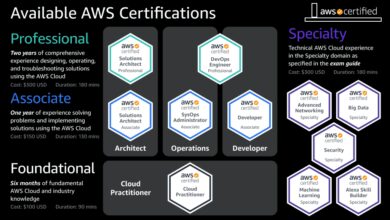
Imagine running your entire business infrastructure without owning a single server. That’s the magic of AWS cloud—flexible, scalable, and ready to power innovation at lightning speed.
What Is AWS Cloud and Why It Matters

Amazon Web Services (AWS) cloud is the world’s most widely adopted cloud platform, offering over 200 fully featured services from data centers globally. Launched in 2006, AWS revolutionized how businesses access computing power, storage, and databases—shifting from capital-heavy on-premises setups to a pay-as-you-go model that scales with demand.


History and Evolution of AWS Cloud
AWS began as an internal solution for Amazon’s own scalability challenges. As the e-commerce giant grew, it needed a way to manage unpredictable traffic spikes during peak seasons. Instead of building more physical servers, Amazon engineers created a virtualized infrastructure that could scale dynamically.
In 2006, AWS launched its first public services: Simple Storage Service (S3) and Elastic Compute Cloud (EC2). These two services laid the foundation for modern cloud computing. Since then, AWS has expanded into machine learning, IoT, serverless computing, and hybrid cloud solutions.
- 2006: Launch of EC2 and S3
- 2010: Introduction of AWS Management Console
- 2014: AWS Lambda introduces serverless computing
- 2020: AWS Outposts brings cloud to on-premises environments
“AWS didn’t just enter the cloud market—it defined it.” — TechCrunch, 2021
How AWS Cloud Differs From Traditional IT Infrastructure
Traditional IT requires companies to purchase, maintain, and upgrade physical servers. This model is not only expensive but also slow to adapt. In contrast, AWS cloud provides instant access to computing resources via the internet.
With AWS, you don’t need to forecast capacity needs months in advance. Need more servers during a product launch? Spin them up in minutes. Traffic drops? Scale down and save costs. This agility is a game-changer for startups and enterprises alike.
- No upfront hardware costs
- Global reach with 33 Availability Zones across 12 geographic regions
- Automated backups, updates, and security patches
Core Services Offered by AWS Cloud
The strength of AWS cloud lies in its breadth and depth of services. Whether you’re hosting a website, analyzing big data, or deploying AI models, AWS has a tool for it. Let’s explore the foundational pillars.
Compute Services: Powering Your Applications
AWS offers multiple compute options tailored to different workloads. The most popular is Amazon EC2 (Elastic Compute Cloud), which lets you rent virtual servers in the cloud. You can choose from hundreds of instance types optimized for memory, compute, storage, or GPU performance.
For event-driven applications, AWS Lambda enables serverless computing—run code without provisioning servers. You’re charged only when your function executes, making it highly cost-efficient for sporadic tasks.
Other notable compute services include:
- Amazon ECS and EKS: For containerized applications using Docker and Kubernetes
- AWS Fargate: Serverless containers that eliminate server management
- AWS Batch: For batch processing jobs at scale
Learn more about AWS compute services at AWS EC2 Official Page.
Storage Solutions: Secure and Scalable Data Handling
Data is the lifeblood of modern applications, and AWS cloud offers a tiered storage strategy to match every need. Amazon S3 (Simple Storage Service) is the most widely used object storage service, ideal for backups, media files, and data lakes.
S3 offers multiple storage classes:
- S3 Standard: For frequently accessed data
- S3 Intelligent-Tiering: Automatically moves data between access tiers
- S3 Glacier: For long-term archival at low cost
For block-level storage attached to EC2 instances, Amazon EBS (Elastic Block Store) provides persistent volumes. Meanwhile, Amazon EFS (Elastic File System) offers scalable file storage for Linux workloads.
“S3 has become the de facto standard for cloud storage.” — Gartner, 2023
Networking and Content Delivery
AWS cloud ensures your applications are fast, secure, and globally accessible. Amazon VPC (Virtual Private Cloud) lets you isolate your resources in a private network, controlling IP ranges, subnets, and security rules.
To deliver content quickly to users worldwide, Amazon CloudFront acts as a content delivery network (CDN). It caches content at edge locations, reducing latency and improving load times.
Additional networking tools include:
- AWS Direct Connect: Private connection from your data center to AWS
- Route 53: Scalable DNS service for domain routing
- Global Accelerator: Improves application availability and performance
Key Benefits of Using AWS Cloud
Organizations migrate to AWS cloud not just for technology, but for strategic advantage. The benefits go beyond cost savings—they enable innovation, resilience, and speed.
Cost Efficiency and Pay-as-You-Go Model
One of the biggest advantages of AWS cloud is its pricing model. Unlike traditional IT, where you pay for hardware whether you use it or not, AWS charges only for what you consume.
You can choose from:
- On-Demand Instances: Pay by the second with no commitment
- Reserved Instances: Save up to 75% with 1- or 3-year commitments
- Spot Instances: Bid on unused EC2 capacity for up to 90% off
This flexibility allows startups to launch with minimal investment and enterprises to optimize spending across thousands of servers.
Scalability and Elasticity
AWS cloud automatically scales resources based on demand. During high traffic—like a Black Friday sale—your application can grow to handle millions of requests. When traffic drops, it scales back down.
Services like Auto Scaling and Elastic Load Balancing make this seamless. You define rules (e.g., “add a server when CPU exceeds 70%”), and AWS handles the rest.
“Elasticity is the true superpower of the cloud.” — AWS Whitepaper, 2022
Global Reach and High Availability
AWS operates in 33 geographic regions with 102 Availability Zones (AZs), and continues to expand. Each AZ is a separate data center with independent power, cooling, and networking.
By deploying applications across multiple AZs, you achieve high availability. If one zone fails, others take over—ensuring your app stays online. This architecture supports disaster recovery and compliance with data sovereignty laws.
- Regions in North America, Europe, Asia-Pacific, Middle East, Africa, and South America
- Local zones for ultra-low latency in major cities
- Wavelength zones for 5G edge computing
Security and Compliance in AWS Cloud
Security is often a top concern for businesses moving to the cloud. AWS cloud addresses this with a shared responsibility model: AWS secures the infrastructure, while customers secure their data and applications.
AWS Shared Responsibility Model Explained
Understanding this model is critical. AWS is responsible for:
- Physical security of data centers
- Hardware, software, and network infrastructure
- Availability of core services
Customers are responsible for:
- Access control (IAM policies, MFA)
- Encryption of data at rest and in transit
- Firewall configuration and OS patching
This division ensures both parties play a role in maintaining a secure environment.
Built-in Security Tools and Best Practices
AWS provides a robust suite of security services:
- AWS Identity and Access Management (IAM): Control who can access which resources
- AWS Shield: Protect against DDoS attacks
- AWS WAF: Web Application Firewall to block common exploits
- AWS Config: Track configuration changes and compliance
- Amazon GuardDuty: Intelligent threat detection using machine learning
Additionally, AWS Key Management Service (KMS) allows you to create and manage encryption keys, ensuring data privacy.
“AWS security is not a feature—it’s foundational.” — AWS Chief Security Officer
Real-World Use Cases of AWS Cloud
From streaming giants to government agencies, AWS cloud powers a diverse range of applications. Let’s look at how different industries leverage its capabilities.
Netflix: Streaming at Global Scale
Netflix, one of the largest AWS customers, runs nearly its entire infrastructure on AWS cloud. With over 230 million subscribers, Netflix relies on AWS to deliver 1+ billion hours of content weekly.
Key AWS services used:
- Amazon EC2 for video encoding and recommendation engines
- Amazon S3 for storing petabytes of video content
- Amazon CloudFront for fast global delivery
- AWS Lambda for real-time analytics
This setup allows Netflix to launch new features rapidly and handle traffic spikes during show releases.
NASA: Advancing Space Exploration
NASA uses AWS cloud to process massive amounts of satellite and Mars rover data. The Jet Propulsion Laboratory (JPL) migrated its Earth Science Data Systems to AWS, enabling faster data access for researchers worldwide.
Benefits include:
- Reduced data processing time from weeks to hours
- Open access to climate and environmental datasets
- Use of AWS AI/ML services to detect wildfires and monitor deforestation
Visit NASA on AWS to explore more.
Siemens: Industrial IoT and Digital Twins
Siemens uses AWS cloud to build digital twins—virtual replicas of physical machines. These models help predict maintenance needs and optimize performance in real time.
By combining AWS IoT Core with Amazon SageMaker (ML service), Siemens analyzes sensor data from turbines, trains, and factories to prevent downtime.
- Real-time monitoring of 1.5 million industrial assets
- Predictive maintenance reduces costs by up to 30%
- Secure data exchange across global operations
Migrating to AWS Cloud: Steps and Best Practices
Moving to AWS cloud isn’t just a technical shift—it’s a transformation. A well-planned migration minimizes risk and maximizes ROI.
Assessment and Planning Phase
Start by inventorying your existing applications, databases, and dependencies. Use tools like AWS Application Discovery Service to collect configuration and performance data.
Then, categorize workloads:
- Rehost (lift-and-shift): Move VMs as-is using AWS VM Import/Export
- Refactor: Modify apps to use cloud-native features like Lambda
- Replace: Swap legacy apps with SaaS solutions (e.g., Salesforce)
- Retire: Decommission unused systems
Prioritize based on business impact and technical complexity.
Execution and Optimization
Use the AWS Migration Hub to track progress across tools and teams. For large-scale migrations, consider:
- AWS Snow Family: For transferring petabytes of data offline
- AWS Database Migration Service (DMS): Migrate databases with minimal downtime
- CloudEndure Migration: Real-time replication for seamless cutover
After migration, optimize performance and cost using AWS Trusted Advisor and Cost Explorer.
“The goal isn’t just to move to the cloud—it’s to thrive there.” — AWS Migration Guide
Innovation and Future Trends in AWS Cloud
AWS isn’t standing still. It continues to push the boundaries of what’s possible in cloud computing, investing heavily in emerging technologies.
Serverless and Event-Driven Architectures
Serverless computing, led by AWS Lambda, is gaining traction. Developers write functions that run in response to events—like a file upload or API call—without managing servers.
Trends include:
- Longer execution times (up to 15 minutes)
- Integration with containers via AWS Lambda SnapStart
- Event-driven microservices using Amazon EventBridge
This model reduces operational overhead and accelerates development cycles.
AI and Machine Learning Integration
AWS makes AI accessible through services like:
- Amazon SageMaker: Build, train, and deploy ML models faster
- Amazon Rekognition: Image and video analysis
- Amazon Polly: Text-to-speech conversion
- Amazon Lex: Power chatbots and voice assistants
Even non-experts can add intelligent features to their apps using pre-trained models.
Hybrid and Edge Computing with AWS
Not all data can be processed in the cloud. For low-latency needs (e.g., autonomous vehicles), AWS offers edge solutions:
- AWS Outposts: Run AWS infrastructure on-premises
- AWS Snowcone: Portable devices for edge data collection
- AWS Wavelength: Embed AWS services within 5G networks
These bridge the gap between cloud and physical locations, enabling real-time processing.
Challenges and Considerations When Using AWS Cloud
While AWS cloud offers immense benefits, it’s not without challenges. Being aware of these helps organizations prepare and succeed.
Complexity and Learning Curve
With over 200 services, AWS can be overwhelming. New users often struggle with service selection, pricing models, and security configurations.
Mitigation strategies:
- Start with AWS Well-Architected Framework
- Use managed services (e.g., RDS instead of self-managed databases)
- Invest in training via AWS Training and Certification
Cost Management and Unexpected Bills
Without proper monitoring, cloud costs can spiral. Common issues include:
- Unused resources (orphaned EBS volumes, idle EC2 instances)
- Over-provisioned databases
- Data transfer fees between regions
Solutions:
- Set up billing alerts
- Use AWS Budgets to enforce spending limits
- Enable Cost Allocation Tags to track departmental usage
“The cloud is not inherently cheaper—it’s cheaper when managed well.” — Cloud Economist Report, 2023
What is AWS cloud?
AWS cloud is Amazon’s comprehensive, evolving cloud computing platform that provides on-demand access to computing resources like servers, storage, databases, networking, and machine learning over the internet.
How much does AWS cloud cost?
AWS uses a pay-as-you-go pricing model. Costs vary based on services used. Many services offer a free tier for new users, and tools like AWS Pricing Calculator help estimate expenses.
Is AWS cloud secure?
Yes, AWS cloud is highly secure. It follows the shared responsibility model, where AWS manages infrastructure security, and customers manage their data, applications, and access controls using built-in tools like IAM and KMS.
Can I migrate my existing apps to AWS cloud?
Absolutely. AWS provides migration tools like AWS Migration Hub, Database Migration Service, and Snow Family to help move applications, data, and servers with minimal downtime.
What industries use AWS cloud?
AWS is used across industries including media (Netflix), healthcare, finance, government (NASA), manufacturing (Siemens), and retail. Its flexibility makes it suitable for any sector.
Adopting AWS cloud is more than a technical upgrade—it’s a strategic shift toward agility, innovation, and resilience. From startups to global enterprises, organizations leverage AWS to reduce costs, scale instantly, and deploy cutting-edge technologies like AI and IoT. While challenges like complexity and cost management exist, proper planning and use of AWS tools can overcome them. As cloud computing continues to evolve, AWS remains at the forefront, shaping the future of digital transformation.
Further Reading: