Imagine querying massive datasets in seconds—without managing servers or complex infrastructure. That’s the magic of AWS Athena. This serverless query service lets you analyze data directly from Amazon S3 using standard SQL, making big data accessible to everyone from developers to data analysts.
What Is AWS Athena and How Does It Work?

AWS Athena is a serverless query service that enables users to analyze data stored in Amazon S3 using standard SQL. Unlike traditional data warehousing solutions, Athena doesn’t require setting up or managing any infrastructure. It automatically scales to handle queries of any size, making it a powerful tool for organizations looking to extract insights from large datasets without the overhead of maintaining databases.
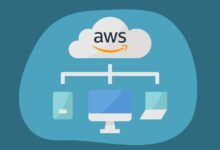
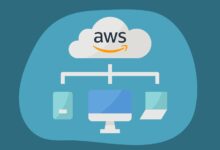
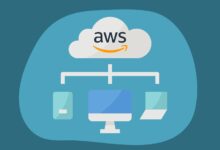
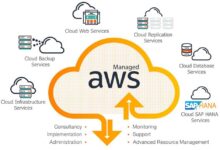
Serverless Architecture Explained
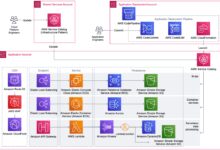
One of the defining features of AWS Athena is its serverless nature. This means there are no servers to provision, no clusters to manage, and no capacity planning required. When you submit a query, Athena automatically executes it in a distributed fashion across multiple nodes, ensuring high performance and reliability.
- No need to manage EC2 instances or Hadoop clusters.
- Queries are executed on-demand, so you only pay for what you use.
- Automatic scaling handles everything from small log files to petabyte-scale data lakes.
This architecture significantly reduces operational complexity and allows teams to focus on data analysis rather than infrastructure maintenance.
Integration with Amazon S3
Athena is deeply integrated with Amazon Simple Storage Service (S3), which serves as the primary data lake for most AWS users. Data stored in S3—whether in CSV, JSON, Parquet, ORC, or other formats—can be queried directly using Athena without needing to load it into a separate database.
“Athena turns your S3 bucket into a queryable database.” — AWS Official Documentation
This tight integration eliminates data movement, reduces latency, and ensures that your analytics are always working with the most up-to-date information. You simply define a schema using the Hive metastore, and Athena does the rest.
Standard SQL Support
Athena supports ANSI SQL, making it accessible to anyone familiar with database querying. Whether you’re filtering logs, aggregating metrics, or joining multiple datasets, you can use familiar SQL syntax to get results quickly.
- Supports complex queries including JOINs, subqueries, and window functions.
- Compatible with common BI tools like Tableau, QuickSight, and Looker via JDBC/ODBC drivers.
- Enables seamless transition for teams already using SQL-based systems.
This lowers the learning curve and accelerates time-to-insight for both technical and non-technical users.
Key Features That Make AWS Athena a Game-Changer
AWS Athena stands out in the crowded cloud analytics space due to several innovative features that combine ease of use with enterprise-grade performance. These features make it ideal for ad-hoc analysis, log processing, and large-scale data exploration.
Fully Managed Query Engine
Unlike traditional data warehouses that require extensive setup and tuning, AWS Athena is fully managed by AWS. This means automatic patching, version updates, and backend optimization are all handled behind the scenes.
- No administrative tasks like index management or vacuuming tables.
- High availability and fault tolerance built-in.
- Seamless integration with AWS IAM for security and access control.
This level of automation allows data engineers and analysts to focus on deriving value from data instead of managing systems.
Cost-Effective Pay-Per-Query Model
Athena operates on a pay-per-query pricing model, where you’re charged based on the amount of data scanned per query. This makes it extremely cost-efficient, especially when compared to always-on data warehouse solutions.
- Only pay for the data your query actually reads.
- Costs can be minimized by using columnar formats like Parquet and partitioning data.
- No upfront costs or long-term commitments.
For example, querying 1 GB of compressed data might cost just a few cents, making Athena perfect for exploratory analytics and intermittent workloads.
Support for Multiple Data Formats
Athena supports a wide range of data formats, allowing flexibility in how you store and structure your data in S3. This versatility is crucial for organizations dealing with diverse data sources.
- Structured formats: CSV, TSV
- Semi-structured: JSON, XML
- Columnar formats: Apache Parquet, Apache ORC (recommended for performance)
- Compressed files: GZIP, Snappy, BZIP2
By supporting these formats natively, Athena reduces the need for ETL preprocessing, enabling faster time-to-insight.
How to Get Started with AWS Athena: A Step-by-Step Guide
Getting started with AWS Athena is straightforward and can be done in minutes. Whether you’re analyzing application logs, IoT data, or business metrics, this guide will walk you through the essential steps.
Step 1: Prepare Your Data in Amazon S3
The first step is to ensure your data is stored in an S3 bucket. Organize your data logically using prefixes (folders) and consider partitioning strategies for better performance.
- Upload sample data (e.g., CSV or JSON logs) to an S3 bucket.
- Use consistent naming conventions and folder structures.
- Ensure proper IAM permissions are set for Athena to access the bucket.
You can automate data ingestion using AWS services like Kinesis, Lambda, or Glue, but for initial testing, manual upload works fine.
Step 2: Create a Database and Table in Athena
Once your data is in S3, you’ll need to define a schema so Athena knows how to interpret it. This is done through the AWS Management Console, CLI, or SDKs.
- Open the Athena console and create a new database.
- Use the “Create Table from S3 Bucket” wizard or write a DDL statement.
- Define columns, data types, and the location of your data in S3.
For example, if you have web server logs in JSON format, you can define a table with fields like timestamp, ip_address, and request_method.
Step 3: Run Your First Query
With the table created, you’re ready to run SQL queries. The Athena query editor provides a simple interface for writing and executing queries.
- Type a simple SELECT statement (e.g.,
SELECT * FROM logs LIMIT 10;). - Click “Run” and view results in the output panel.
- Check the query cost and execution time in the summary section.
You’ll see results almost instantly, demonstrating how quickly Athena can process data stored in S3.
Performance Optimization Techniques for AWS Athena
While AWS Athena is fast out of the box, optimizing your setup can significantly reduce query times and costs. Implementing best practices ensures efficient data retrieval and scalable analytics.
Use Columnar File Formats (Parquet and ORC)
One of the most effective ways to improve performance is by storing data in columnar formats like Apache Parquet or ORC. These formats store data by columns rather than rows, allowing Athena to read only the relevant columns during a query.
- Reduces the amount of data scanned, lowering costs.
- Supports advanced compression techniques (e.g., Snappy, Zlib).
- Improves query speed, especially for aggregation and filtering operations.
For instance, converting a 10 GB CSV file to Parquet can reduce its size to 1–2 GB and cut query costs by up to 90%.
Partition Your Data Strategically
Partitioning involves organizing data in S3 using a hierarchical structure based on values like date, region, or category. Athena can skip entire partitions that don’t match your query filter, drastically reducing scan volume.
- Common partition keys:
year=,month=,day=,region=. - Use AWS Glue Crawlers to automatically detect and register partitions.
- Avoid over-partitioning, which can lead to small files and performance degradation.
For example, if you query logs for a specific day, Athena will only scan data from that partition instead of the entire dataset.
Compress and Archive Cold Data
Compressing data not only saves storage costs but also reduces the amount of data transferred during queries. Athena supports several compression algorithms, including GZIP, BZIP2, and Snappy.
- GZIP offers high compression ratios, ideal for archival data.
- Snappy provides faster decompression, better for frequently accessed data.
- Combine compression with partitioning for maximum efficiency.
Additionally, move older, infrequently accessed data to S3 Glacier or Glacier Deep Archive to further reduce storage costs while retaining queryability via Athena.
Real-World Use Cases of AWS Athena
AWS Athena is not just a theoretical tool—it’s being used across industries to solve real business problems. From cybersecurity to financial reporting, its flexibility and scalability make it a go-to solution for modern data teams.
Log Analysis and Security Monitoring
Organizations generate vast amounts of log data from applications, servers, and network devices. Athena enables security teams to query these logs in real time to detect anomalies, investigate breaches, or comply with regulations.
- Analyze VPC Flow Logs to monitor network traffic.
- Query CloudTrail logs to audit user activity and API calls.
- Identify brute-force attacks by analyzing authentication logs.
For example, a DevOps team can write a query to find all failed login attempts over the past week and trigger alerts using AWS Lambda.
Business Intelligence and Reporting
Many companies use Athena as a backend for their BI dashboards. By connecting tools like Amazon QuickSight or Tableau to Athena, analysts can create interactive reports without needing a dedicated data warehouse.
- Generate daily sales reports from transaction data in S3.
- Track customer behavior by analyzing clickstream data.
- Combine data from multiple sources (e.g., CRM, ERP) for unified reporting.
This approach eliminates ETL bottlenecks and allows for near real-time decision-making.
IoT and Sensor Data Analytics
Internet of Things (IoT) applications generate continuous streams of data from sensors and devices. Athena allows engineers to analyze this data at scale to monitor performance, predict failures, or optimize operations.
- Process telemetry data from connected vehicles.
- Analyze temperature and humidity logs from smart buildings.
- Aggregate sensor readings for predictive maintenance models.
With AWS IoT Core feeding data into S3, Athena becomes a powerful analytics layer for extracting operational insights.
Security and Access Control in AWS Athena
Security is paramount when dealing with sensitive data. AWS Athena integrates seamlessly with AWS Identity and Access Management (IAM), AWS Lake Formation, and encryption services to ensure data remains protected.
Managing Permissions with IAM
IAM allows you to define fine-grained access policies for users and roles interacting with Athena. You can control who can run queries, access specific databases, or view results.
- Create IAM policies that grant access to specific S3 buckets.
- Use least-privilege principles to minimize exposure.
- Integrate with federated identity providers like Active Directory via AWS SSO.
For example, you can restrict a data analyst to only query the marketing_db and prevent them from accessing financial data.
Data Encryption at Rest and in Transit
Athena supports encryption for both data in S3 and query results stored in another S3 bucket. This ensures compliance with standards like GDPR, HIPAA, and SOC 2.
- Enable server-side encryption (SSE-S3 or SSE-KMS) on S3 buckets.
- Use client-side encryption for additional protection.
- Ensure query result locations are encrypted using AWS KMS keys.
All data transferred between S3 and Athena is encrypted in transit using TLS 1.2 or higher.
Audit and Monitor with CloudTrail and CloudWatch
To maintain accountability, AWS provides tools to log and monitor Athena usage. CloudTrail captures API calls, while CloudWatch tracks query metrics and errors.
- Enable CloudTrail to log all Athena API activity (e.g.,
StartQueryExecution). - Set up CloudWatch alarms for failed queries or high-cost operations.
- Use AWS Config to track configuration changes to Athena workgroups.
These logs help with forensic analysis, compliance audits, and operational troubleshooting.
Advanced Features and Integrations with AWS Athena
Beyond basic querying, AWS Athena offers advanced capabilities that extend its functionality and integration with the broader AWS ecosystem.
Federated Querying with AWS Glue Data Catalog
Athena can query data not only in S3 but also from other AWS services like RDS, DynamoDB, and Amazon Redshift using federated queries. This is made possible through the AWS Glue Data Catalog, which acts as a centralized metadata repository.
- Run cross-account and cross-service queries without data movement.
- Use Lambda functions as custom connectors for external data sources.
- Leverage Glue Crawlers to auto-detect schema from various databases.
This feature enables unified analytics across hybrid environments, breaking down data silos.
Using Athena Workgroups for Cost and Query Management
Workgroups in Athena allow you to isolate and manage query execution environments. They are particularly useful in multi-team organizations where cost control and access policies vary.
- Create separate workgroups for development, production, and finance teams.
- Set query execution limits and enforce output locations.
- Enable cost tracking by workgroup using tags and budgets.
You can also enforce encryption settings and disable client-side tunneling per workgroup for enhanced security.
Integration with AWS Lake Formation
AWS Lake Formation simplifies the process of building, securing, and managing data lakes. When used with Athena, it provides centralized governance, fine-grained access control, and automated data cataloging.
- Define data access policies at the column or row level.
- Automatically classify and catalog data using machine learning.
- Enforce GDPR and HIPAA compliance through policy templates.
Lake Formation turns Athena into a governed analytics engine suitable for enterprise deployments.
Common Challenges and Best Practices for AWS Athena
While AWS Athena is powerful, users may encounter performance issues, cost overruns, or configuration pitfalls. Understanding common challenges and applying best practices can help avoid these problems.
Challenge: High Query Costs Due to Full Scans
One of the most common issues is unexpectedly high costs caused by queries that scan large volumes of data. This often happens when data is stored in inefficient formats or lacks proper partitioning.
- Solution: Convert data to Parquet/ORC and implement date-based partitioning.
- Solution: Use
EXPLAINto estimate data scanned before running expensive queries. - Solution: Set up cost controls using workgroups and budget alerts.
Monitoring query history in the Athena console helps identify costly queries for optimization.
Challenge: Slow Query Performance on Large Datasets
Queries may run slowly if the underlying data is not optimized or if the schema is poorly designed.
- Solution: Avoid SELECT *; instead, specify only needed columns.
- Solution: Use partition filters in WHERE clauses (e.g.,
WHERE year = '2023'). - Solution: Pre-aggregate data for common reports using materialized views (via Glue or Lambda).
Regularly review query patterns and optimize data layout accordingly.
Best Practice: Use Named Queries and Query History
To improve productivity and maintain consistency, save frequently used queries as “Named Queries” in Athena. This promotes reusability and reduces errors.
- Organize queries by project or team.
- Leverage query history to debug or refine previous attempts.
- Export and version-control important queries using AWS SDKs.
This is especially useful for onboarding new team members or auditing analytical workflows.
What is AWS Athena used for?
AWS Athena is used to query and analyze data stored in Amazon S3 using standard SQL. It’s commonly used for log analysis, business intelligence, security monitoring, and IoT data processing without requiring any infrastructure setup.
Is AWS Athena free to use?
AWS Athena is not free, but it follows a pay-per-query pricing model. You are charged based on the amount of data scanned per query (typically $5 per TB). There are no upfront costs or minimum fees, making it cost-effective for intermittent or exploratory analytics.
How does AWS Athena differ from Amazon Redshift?
Athena is serverless and ideal for ad-hoc querying of data in S3, while Redshift is a fully managed data warehouse optimized for complex, high-performance analytics. Athena requires no setup and scales automatically, whereas Redshift requires cluster management but offers faster performance for large-scale, continuous workloads.
Can AWS Athena query JSON or CSV files?
Yes, AWS Athena can query JSON, CSV, Parquet, ORC, and other formats directly from S3. For better performance and lower costs, it’s recommended to use columnar formats like Parquet and apply compression and partitioning.
How do I secure data in AWS Athena?
Data security in AWS Athena is achieved through IAM policies, S3 encryption, AWS KMS, and AWS Lake Formation. You can control access at the user, database, table, or even column level, and all query results can be encrypted in S3.
In conclusion, AWS Athena revolutionizes how organizations interact with their data. By eliminating infrastructure management, supporting standard SQL, and integrating seamlessly with S3 and other AWS services, it empowers teams to perform fast, cost-effective analytics at scale. Whether you’re analyzing logs, generating reports, or exploring IoT data, Athena provides a flexible, secure, and powerful platform. By following best practices like using columnar formats, partitioning data, and leveraging federated queries, you can maximize performance and minimize costs. As data continues to grow in volume and complexity, AWS Athena remains a critical tool in the modern data stack—turning your S3 data lake into an intelligent, queryable asset.
Recommended for you 👇
Further Reading: