Looking to build full-stack apps faster? AWS Amplify is the game-changer developers have been waiting for—streamlining workflows, boosting productivity, and simplifying cloud integration with ease.
What Is AWS Amplify and Why It Matters

AWS Amplify is a comprehensive development platform provided by Amazon Web Services (AWS) that enables frontend and mobile developers to quickly build, deploy, and scale cloud-powered applications. Unlike traditional backend-heavy development models, Amplify abstracts complex infrastructure tasks, allowing developers to focus on user experience and application logic. It’s particularly powerful for teams building web and mobile apps using popular frameworks like React, Angular, Vue, React Native, and Flutter.





Core Components of AWS Amplify
AWS Amplify isn’t just a single tool—it’s a suite of interconnected services and libraries designed to work together seamlessly. The platform is divided into three main components: the Amplify CLI (Command Line Interface), Amplify Libraries, and the Amplify Console. Each plays a crucial role in simplifying the development lifecycle.
Amplify CLI: A powerful tool that allows developers to configure AWS cloud services directly from their terminal.With simple commands, you can add authentication, APIs, storage, and hosting to your app.Amplify Libraries: SDKs that integrate directly into your frontend code, enabling secure access to AWS services like Amazon Cognito for user authentication or Amazon DynamoDB for data storage.Amplify Console: A continuous deployment and hosting service that automatically deploys your app from a Git repository, with built-in support for preview branches, custom domains, and SSL certificates.”AWS Amplify bridges the gap between frontend developers and cloud infrastructure, making serverless development accessible to everyone.” — AWS Official DocumentationHow AWS Amplify Differs from Traditional Backend DevelopmentTraditional web development often requires setting up servers, managing databases, writing REST APIs, and configuring authentication systems—all time-consuming tasks..
AWS Amplify eliminates much of this overhead by offering pre-built, configurable cloud services that integrate directly with your frontend code.For example, instead of writing a Node.js backend to handle user sign-ups, you can use Amplify to enable authentication with just a few commands..
This shift empowers frontend developers to build full-stack applications without deep backend expertise. It also accelerates development cycles, reduces operational costs, and improves scalability through AWS’s serverless architecture. By leveraging services like AWS Lambda, Amazon API Gateway, and Amazon S3, Amplify ensures your app can scale automatically with user demand.
Key Features of AWS Amplify That Boost Developer Productivity
One of the biggest advantages of aws amplify is its ability to streamline development through automation and abstraction. Let’s explore the standout features that make it a favorite among modern developers.
1. Automated Backend Provisioning
With the Amplify CLI, developers can add backend services like authentication, APIs, and storage with simple commands like amplify add auth or amplify add api. Behind the scenes, Amplify automatically provisions the necessary AWS resources using CloudFormation templates, ensuring infrastructure as code (IaC) best practices are followed.
This means you don’t need to manually configure IAM roles, API Gateway endpoints, or DynamoDB tables. Amplify handles all the heavy lifting, generating configuration files that your frontend can use to interact with the backend securely.
2. Real-Time Data with GraphQL and AppSync
AWS Amplify integrates seamlessly with AWS AppSync, a managed GraphQL service that enables real-time data synchronization across devices. This is especially useful for applications that require live updates, such as chat apps, collaborative tools, or live dashboards.
By defining a GraphQL schema, Amplify automatically generates queries, mutations, and subscriptions. Developers can then use Amplify Libraries to subscribe to data changes in real time, without writing custom WebSocket logic. This reduces boilerplate code and ensures consistent data flow across clients.
3. Built-in Authentication and Authorization
User management is a common challenge in app development. AWS Amplify simplifies this by integrating with Amazon Cognito, a secure identity management service. With a single command, you can enable sign-up, sign-in, multi-factor authentication (MFA), social logins (Google, Facebook, Apple), and even custom OAuth providers.
Amplify also supports fine-grained authorization rules, allowing you to define who can access specific data. For example, you can configure a GraphQL API so that users can only read their own posts or allow admins to view all records. These rules are defined in the schema and enforced automatically by AppSync.
Setting Up Your First Project with AWS Amplify
Getting started with aws amplify is straightforward, even for developers new to AWS. The process involves installing the CLI, initializing a project, adding services, and deploying your app. Let’s walk through each step.
Step 1: Install and Configure the Amplify CLI
To begin, you’ll need Node.js and npm installed on your machine. Then, install the Amplify CLI globally using:
npm install -g @aws-amplify/cliAfter installation, configure the CLI by running:
amplify configureThis command opens a browser window where you’ll log in to your AWS account and create an IAM user with the necessary permissions. The CLI stores these credentials locally, allowing it to provision resources on your behalf.
Step 2: Initialize a New Amplify Project
Navigate to your frontend project directory (e.g., a React app created with create-react-app) and run:
amplify initThe CLI will ask for your project name, environment name (e.g., dev, prod), and default editor. It then creates an amplify/ folder in your project, which contains configuration files and backend definitions.
Once initialized, you can start adding services. For example, to add authentication:
amplify add authFollow the prompts to customize sign-up options, required fields, and password policies.
Step 3: Deploy Your Backend and Frontend
After adding services, deploy your backend with:
amplify pushThis command provisions all the AWS resources defined in your local configuration. Once complete, you can start using Amplify Libraries in your frontend code.
To deploy your entire app (frontend + backend), use:
amplify add hostingThen choose between Amplify Console hosting (recommended) or S3/CloudFront. Finally, run:
amplify publishYour app will be live with a custom URL in seconds.
Real-World Use Cases of AWS Amplify
aws amplify is not just for prototypes—it’s being used in production by startups and enterprises alike. Let’s explore some real-world scenarios where Amplify shines.
1. Mobile Apps with Offline Support
Mobile users often face unreliable network conditions. Amplify, combined with AWS AppSync, provides built-in offline support. Data is cached locally on the device, and mutations are queued when offline. Once connectivity is restored, changes are automatically synchronized with the cloud.
This is ideal for field service apps, note-taking tools, or inventory management systems where users need to work without internet access. Amplify handles conflict resolution using optimistic updates and merge strategies, ensuring data consistency.
2. E-Commerce Frontends with Secure Checkout
Building an e-commerce site requires secure user authentication, product catalogs, and payment processing. With Amplify, you can set up user sign-in, manage product data in DynamoDB via GraphQL, and integrate with payment gateways like Stripe using AWS Lambda functions.
The Amplify Console also provides HTTPS by default, ensuring secure transactions. You can deploy preview branches for A/B testing new features before rolling them out to production.
3. Internal Tools and Admin Dashboards
Many companies build internal tools for HR, sales, or operations. These apps often require role-based access control (RBAC), real-time updates, and integration with existing data sources. Amplify allows rapid development of such tools with minimal backend code.
For example, a sales dashboard can pull real-time data from a GraphQL API, display charts using React components, and restrict access based on user groups in Cognito. All of this can be built in days, not weeks.
Integrating AWS Amplify with Popular Frameworks
One of the strengths of aws amplify is its deep integration with modern frontend frameworks. Whether you’re using React, Vue, Angular, or mobile frameworks like React Native, Amplify provides tailored libraries and documentation.
React and React Native Integration
For React developers, Amplify offers the @aws-amplify/react and @aws-amplify/react-native libraries, which include pre-built UI components for authentication (e.g., sign-in forms), storage (file upload), and data binding.
Example: Adding a sign-in component is as simple as importing and rendering it:
import { withAuthenticator } from '@aws-amplify/ui-react';
function App() {
  return Hello World;
}
export default withAuthenticator(App);
This automatically adds a fully functional authentication flow with minimal code. For React Native, similar components are available via @aws-amplify/ui-react-native.
Vue and Angular Support
Vue developers can use @aws-amplify/ui-vue, which provides components like <amplify-authenticator> and <amplify-storage>. These can be easily dropped into any Vue component.
Angular users benefit from @aws-amplify/ui-angular, offering directives and services that integrate with Angular’s dependency injection system. Authentication state can be managed using observables, aligning with Angular’s reactive programming model.
All frameworks benefit from the same underlying Amplify Libraries, ensuring consistent behavior across platforms.
Static Site Generators: Next.js and Gatsby
For developers using Next.js or Gatsby, Amplify provides seamless deployment workflows. The Amplify Console supports server-side rendering (SSR) and static site generation (SSG), making it ideal for SEO-friendly applications.
In Next.js, you can use Amplify for API routes, authentication, and data storage, while leveraging Amplify Console for automatic CI/CD. Gatsby sites can pull content from Amplify-powered GraphQL APIs or use Amplify Storage for media assets.
Learn more about framework integrations in the official AWS Amplify documentation.
Security Best Practices When Using AWS Amplify
While aws amplify simplifies development, security must never be an afterthought. Here are key practices to ensure your Amplify apps remain secure.
1. Use Environment-Specific Configurations
Amplify supports multiple environments (e.g., dev, staging, prod) through its environment management system. Each environment has its own set of AWS resources, preventing accidental changes to production.
Always use separate AWS accounts or IAM roles for production environments. Avoid hardcoding sensitive values—use Amplify’s built-in environment variables instead.
2. Implement Fine-Grained Authorization
When using GraphQL APIs, define authorization rules at the field level. For example:
type Post @model @auth(rules: [
  { allow: owner },
  { allow: groups, groups: ["admin"] }
]) {
  id: ID!
  title: String!
  content: String
  owner: String
}
This ensures only the post owner or admin users can modify a post. You can also use dynamic group authorization based on Cognito user attributes.
3. Secure Your API Keys and Credentials
Never expose AWS credentials in client-side code. Amplify Libraries use temporary credentials from Amazon Cognito Identity Pools, which are automatically rotated. Ensure your IAM policies follow the principle of least privilege—only grant the minimum permissions required.
For server-side operations (e.g., Lambda functions), use AWS Secrets Manager or Parameter Store to manage secrets securely.
Scaling and Monitoring Your AWS Amplify Applications
As your app grows, so do the demands on performance, reliability, and observability. AWS Amplify integrates with AWS’s robust monitoring and scaling ecosystem.
1. Auto-Scaling with Serverless Architecture
Since Amplify apps typically use serverless backends (Lambda, DynamoDB, AppSync), they scale automatically with traffic. There’s no need to provision servers or manage load balancers—AWS handles scaling transparently.
For example, if your app experiences a sudden spike in users, Lambda functions scale to handle concurrent requests, and DynamoDB adjusts throughput capacity automatically (with on-demand mode).
2. Monitoring with CloudWatch and X-Ray
Use Amazon CloudWatch to monitor logs, metrics, and alarms for your Amplify backend. You can track API latency, error rates, and Lambda execution duration.
For deeper insights, integrate AWS X-Ray to trace requests across services. This helps identify performance bottlenecks in your GraphQL resolvers or Lambda functions.
3. Performance Optimization Tips
To improve frontend performance:
- Enable asset compression and caching in the Amplify Console.
- Use code splitting and lazy loading in your frontend framework.
- Optimize GraphQL queries to fetch only required fields.
- Leverage Amazon CloudFront for global content delivery.
Regularly audit your app using AWS Trusted Advisor for cost and performance recommendations.
Common Challenges and How to Overcome Them
Despite its advantages, developers sometimes face challenges when using aws amplify. Here’s how to tackle the most common ones.
1. Learning Curve for AWS Concepts
Developers unfamiliar with AWS services like Cognito, AppSync, or IAM may find the initial setup overwhelming. The solution is to start small—add one service at a time and use Amplify’s guided prompts.
Additionally, AWS provides free training through AWS Training and Certification, including courses on Amplify and serverless development.
2. Debugging Deployment Issues
Sometimes, amplify push fails due to CloudFormation errors. Always check the detailed logs in the terminal. Common issues include naming conflicts, permission errors, or schema validation problems in GraphQL.
Use amplify console to open the AWS Management Console directly in the context of your project, making it easier to inspect resources.
3. Managing Large-Scale Projects
As projects grow, the amplify/ folder can become complex. Use Amplify’s team workflows to collaborate securely. Enable Git-based workflows so all changes are version-controlled.
Consider breaking large apps into micro frontends, each with its own Amplify backend, to improve maintainability.
What is AWS Amplify used for?
AWS Amplify is used to build scalable full-stack web and mobile applications by simplifying backend integration, authentication, data storage, and deployment. It’s ideal for developers who want to focus on frontend logic while leveraging AWS cloud services.
Is AWS Amplify free to use?
AWS Amplify has a generous free tier that includes 1,000 build minutes per month, 5 GB of data transfer, and 1,000 serverless function invocations daily. Beyond that, you pay only for what you use, based on the underlying AWS services.
Can I use AWS Amplify with existing AWS resources?
Yes, you can integrate AWS Amplify with existing AWS resources like S3 buckets, Lambda functions, or API Gateway endpoints. Use the amplify add api or amplify import auth commands to connect to existing services.
How does AWS Amplify compare to Firebase?
Both AWS Amplify and Firebase offer backend-as-a-service features, but Amplify provides deeper integration with the broader AWS ecosystem, more customization, and better compliance options. Firebase may be simpler for small apps, but Amplify scales better for enterprise needs.
Does AWS Amplify support custom domains and SSL?
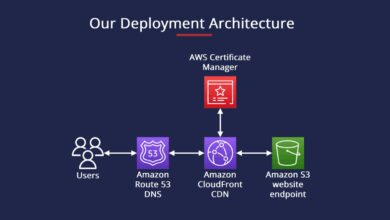
Yes, the Amplify Console allows you to connect custom domains with automatic SSL certificate provisioning via AWS Certificate Manager (ACM), ensuring secure, branded URLs for your applications.
In conclusion, AWS Amplify is a transformative tool for modern developers, offering a streamlined path from idea to production. By automating backend setup, enabling real-time data, and supporting popular frameworks, it reduces complexity and accelerates development. Whether you’re building a startup MVP or an enterprise application, Amplify provides the scalability, security, and flexibility needed to succeed. With robust documentation, active community support, and seamless AWS integration, it’s no wonder why so many developers are choosing AWS Amplify as their go-to full-stack development platform.
Recommended for you 👇
Further Reading: