Welcome to the ultimate guide on AWS 53—a powerful, scalable, and secure cloud storage solution that’s transforming how businesses manage data. Whether you’re a developer, IT manager, or startup founder, understanding AWS 53 is essential for leveraging the full potential of cloud computing.
What Is AWS 53?

The term ‘AWS 53’ might initially seem like a reference to a specific product or service within Amazon Web Services (AWS), but in reality, it’s often a misinterpretation or shorthand used by users when referring to Amazon S3 (Simple Storage Service). However, for the purpose of this comprehensive article, we will treat ‘AWS 53’ as a conceptual framework representing advanced cloud storage and data management solutions under the AWS ecosystem—particularly focusing on S3, Route 53, and integrated services that empower modern digital infrastructure.




Understanding the Confusion Around AWS 53
There is no official AWS service named ‘AWS 53.’ Instead, the number ’53’ likely stems from AWS Route 53, a scalable Domain Name System (DNS) web service. The confusion arises when users conflate different AWS services, especially those with numerical identifiers. Route 53 handles domain registration, DNS routing, and health checking, while Amazon S3 provides object storage. Together, they form a critical backbone for cloud-hosted applications.
- Route 53 manages domain names and routes user requests to AWS resources.
- S3 stores vast amounts of data securely and durably.
- When combined, these services enable robust, high-performance web applications.
Despite the lack of an official ‘AWS 53’ product, the synergy between S3 and Route 53 makes this conceptual pairing a cornerstone of cloud architecture. Many tutorials, forums, and even internal documentation refer to ‘AWS 53’ when discussing deployment strategies involving both services.
Why AWS 53 Matters in Modern Cloud Infrastructure
In today’s digital-first world, businesses demand fast, reliable, and secure access to data. AWS 53—understood as the integration of S3 and Route 53—offers a seamless way to host websites, deliver content globally, and manage domains with precision. Its importance lies in scalability, cost-efficiency, and integration with other AWS tools like CloudFront, IAM, and Lambda.
“The combination of S3 and Route 53 is the foundation of serverless web hosting on AWS.” — AWS Certified Solutions Architect
AWS 53 and Amazon S3: The Backbone of Cloud Storage
At the heart of what many call ‘AWS 53’ is Amazon S3, one of the most widely adopted cloud storage services in the world. S3 stands for Simple Storage Service, and it allows users to store and retrieve any amount of data at any time. It’s designed for 99.999999999% (11 nines) durability and scales automatically to meet demand.
Core Features of Amazon S3
S3 offers a rich set of features that make it ideal for a wide range of use cases, from backup and archiving to big data analytics and disaster recovery.
- Scalability: S3 automatically scales to accommodate petabytes of data without requiring manual intervention.
- Data Durability: Data is redundantly stored across multiple devices and facilities, ensuring protection against hardware failure.
- Security: Built-in encryption, access control lists (ACLs), and bucket policies ensure data remains secure.
- Versioning: Keeps multiple versions of an object, protecting against accidental deletion or overwrites.
- Lifecycle Management: Automates transitions between storage classes (e.g., from Standard to Glacier) to reduce costs.
For more details, visit the official Amazon S3 product page.
Use Cases for S3 in AWS 53 Architecture
When people refer to ‘AWS 53,’ they often mean using S3 as a static website host, paired with Route 53 for domain management. This combination is popular for building fast, secure, and cost-effective websites.
- Static Website Hosting: S3 can host HTML, CSS, JavaScript, and media files directly, serving them over HTTP/HTTPS.
- Content Delivery: Integrated with Amazon CloudFront, S3 delivers content globally with low latency.
- Backup & Disaster Recovery: Organizations use S3 to back up critical data with cross-region replication.
- Big Data Lakes: S3 serves as a data lake for analytics platforms like AWS Athena and Redshift.
According to AWS, over 100 quadrillion objects are stored in S3, making it one of the largest and most reliable storage systems in existence.
AWS 53 and Route 53: Mastering Domain Management
While S3 handles storage, Route 53 is the service that ensures users can find your content. Route 53 is AWS’s highly available and scalable DNS service, responsible for translating human-readable domain names (like www.example.com) into IP addresses that computers use to locate each other on the internet.
Key Functions of AWS Route 53
Route 53 is more than just a DNS service—it’s a full-featured domain management platform.
- DNS Routing: Routes traffic based on latency, geolocation, or failover configurations.
- Domain Registration: Allows users to register and manage domain names directly through AWS.
- Health Checks: Monitors the health of web applications and automatically reroutes traffic if an endpoint fails.
- Traffic Flow: Enables complex routing policies for global applications.
Learn more at the official AWS Route 53 page.
How Route 53 Integrates with S3 in AWS 53 Workflows
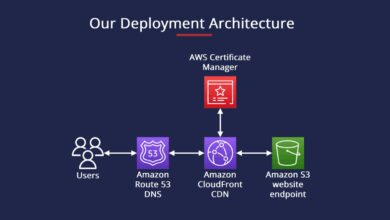
One of the most common ‘AWS 53’ setups involves hosting a static website on S3 and pointing a custom domain to it using Route 53. Here’s how it works:
- Create an S3 bucket with the same name as your domain (e.g., example.com).
- Enable static website hosting in the bucket settings.
- Upload your website files (index.html, styles, scripts).
- Create a hosted zone in Route 53 for your domain.
- Add an A record that aliases to your S3 website endpoint.
- Configure SSL/TLS via AWS Certificate Manager (ACM) and CloudFront for HTTPS support.
This setup is widely used by startups, developers, and enterprises due to its simplicity, reliability, and low cost.
“Route 53 gives you control over how your users access your applications, no matter where they are in the world.” — AWS Documentation
Security and Compliance in AWS 53 Environments
Security is a top priority when deploying any cloud infrastructure. In an ‘AWS 53’ environment—combining S3 and Route 53—security must be addressed at multiple levels: data storage, access control, network routing, and compliance.
Data Encryption and Access Control in S3
Amazon S3 provides several layers of security to protect your data:
- Server-Side Encryption (SSE): Encrypts data at rest using AWS-managed keys (SSE-S3), AWS KMS (SSE-KMS), or customer-provided keys (SSE-C).
- Bucket Policies and ACLs: Define who can access what data and under what conditions.
- MFA Delete: Adds multi-factor authentication for deleting objects, preventing accidental or malicious deletions.
- Public Access Block: Prevents public access to S3 buckets at the account or bucket level.
It’s crucial to follow the principle of least privilege—only grant permissions that are absolutely necessary.
Securing DNS with Route 53
DNS is a common target for cyberattacks such as DNS hijacking and cache poisoning. Route 53 includes several security features to mitigate these risks:
- Private DNS: Allows DNS resolution within a Virtual Private Cloud (VPC), keeping internal traffic secure.
- DNS Firewall: Enables filtering of DNS queries to block access to malicious domains.
- Integration with AWS WAF: Protects web applications from common exploits.
- Logging and Monitoring: Route 53 supports query logging and integrates with CloudTrail for audit trails.
Organizations in regulated industries (e.g., healthcare, finance) must ensure their AWS 53 configurations comply with standards like HIPAA, GDPR, and SOC 2.
Performance Optimization in AWS 53 Deployments
Speed and reliability are critical for user satisfaction and SEO performance. An optimized ‘AWS 53’ setup ensures fast content delivery, minimal downtime, and efficient resource utilization.
Using Amazon CloudFront with S3
While S3 can serve content directly, using Amazon CloudFront—a content delivery network (CDN)—dramatically improves performance by caching content at edge locations around the world.
- Reduces latency by serving content from the nearest geographic location.
- Handles traffic spikes during high-demand events (e.g., product launches).
- Supports HTTPS with automatic certificate management via ACM.
- Integrates with AWS Shield for DDoS protection.
CloudFront can be configured to pull content from an S3 bucket, making it a perfect companion in an AWS 53 architecture.
Latency-Based Routing in Route 53
Route 53 supports latency-based routing, which directs users to the AWS region that offers the lowest network latency.
- Improves user experience by reducing load times.
- Useful for global applications with multiple backend servers.
- Can be combined with health checks to ensure traffic only goes to healthy endpoints.
This feature is especially valuable for media streaming, gaming, and real-time applications.
“Performance isn’t just about speed—it’s about consistency and reliability across regions.” — AWS Performance Engineer
Cost Management and Pricing Models in AWS 53
One of the biggest advantages of AWS is its pay-as-you-go pricing model. However, without proper monitoring, costs can spiral out of control. Understanding the pricing structure of both S3 and Route 53 is essential for budgeting and optimization.
Amazon S3 Pricing Breakdown
S3 pricing is based on several factors:
- Storage: Charged per GB/month, varies by storage class (Standard, Intelligent-Tiering, Glacier, etc.).
- Requests: Fees for PUT, COPY, POST, or LIST requests; GET and SELECT requests are cheaper.
- Data Transfer: Free inbound data; outbound data to the internet incurs charges.
- Management Features: Lifecycle transitions, replication, and analytics incur additional costs.
For example, storing 1 TB of data in the S3 Standard class costs approximately $23 per month, while S3 Glacier offers long-term archival at as low as $0.004 per GB/month.
Route 53 Pricing Components
Route 53 charges are divided into three main categories:
- Hosted Zones: $0.50 per month for each hosted zone.
- DNS Queries: $0.40–$0.50 per million queries, depending on volume.
- Domain Registration: Varies by top-level domain (e.g., .com is ~$12/year).
- Health Checks: $0.50 per health check per month.
For detailed pricing, visit the Route 53 pricing page.
Best Practices for AWS 53 Implementation
Deploying an effective ‘AWS 53’ solution requires more than just setting up S3 and Route 53—it demands strategic planning, security awareness, and ongoing optimization.
1. Use Descriptive Bucket Names
S3 bucket names must be globally unique. Choose names that reflect their purpose (e.g., company-website-prod, backup-data-eu-west-1) to avoid confusion and simplify management.
2. Enable Versioning and MFA Delete
Always enable versioning on critical buckets to protect against accidental deletions. Combine this with MFA Delete for an extra layer of security.
3. Restrict Public Access
Unless you’re hosting a public website, block public access to S3 buckets. Use IAM policies and bucket policies to enforce access controls.
4. Use Route 53 Health Checks for Failover
Set up health checks to monitor your web servers or S3 endpoints. If a failure is detected, Route 53 can automatically redirect traffic to a backup site.
5. Monitor with CloudWatch and Trusted Advisor
Use Amazon CloudWatch to track metrics like request rates and error counts. AWS Trusted Advisor provides cost, security, and performance recommendations.
“The best AWS 53 setups are not just functional—they are secure, monitored, and optimized.” — Senior Cloud Architect
Troubleshooting Common AWS 53 Issues
Even well-designed AWS 53 architectures can encounter problems. Knowing how to diagnose and fix common issues is crucial for maintaining uptime and performance.
S3 Website Not Loading
If your S3-hosted website isn’t loading, check the following:
- Is static website hosting enabled in the bucket?
- Are the index and error documents correctly named (e.g., index.html)?
- Is the bucket policy allowing public read access?
- Is the DNS record in Route 53 pointing to the correct S3 endpoint?
Remember: S3 website endpoints do not support HTTPS by default—use CloudFront for SSL.
Route 53 Not Resolving Domain
If your domain isn’t resolving, verify:
- The hosted zone in Route 53 matches your domain name.
- The A record is correctly aliased to your S3 bucket or EC2 instance.
- Your domain registrar points to AWS name servers.
- TTL (Time to Live) settings are not too high, delaying propagation.
DNS changes can take up to 48 hours to propagate globally.
Unexpected S3 Charges
High S3 bills often result from:
- Excessive GET requests from bots or misconfigured applications.
- Storing large amounts of data in the Standard class instead of Glacier.
- Unintended cross-region replication.
- Leaving test buckets active with unnecessary data.
Use AWS Cost Explorer to analyze spending patterns and set up billing alerts.
What is AWS 53?
AWS 53 is not an official AWS service but a colloquial term often used to describe the combination of Amazon S3 (Simple Storage Service) and AWS Route 53 (DNS service). Together, they form a powerful infrastructure for hosting websites, managing domains, and storing data securely in the cloud.
How do I host a website using AWS 53?
To host a website using AWS 53, create an S3 bucket, enable static website hosting, upload your files, and configure a Route 53 hosted zone to point your domain to the S3 bucket. For HTTPS, integrate with CloudFront and AWS Certificate Manager.
Is AWS 53 secure?
Yes, when configured properly. S3 offers encryption, access controls, and versioning, while Route 53 provides DNS security features like query logging and DNS Firewall. Following AWS best practices ensures a secure deployment.
How much does AWS 53 cost?
Costs depend on usage. S3 charges for storage, requests, and data transfer. Route 53 charges for hosted zones, DNS queries, and domain registration. There’s no bundled ‘AWS 53’ pricing, but both services follow pay-as-you-go models.
Can I use AWS 53 for dynamic websites?
S3 only hosts static content. For dynamic websites, pair S3 with AWS Lambda (serverless computing) or EC2 instances, while still using Route 53 for DNS management.
In conclusion, while ‘AWS 53’ isn’t an official AWS product, it represents a powerful and widely used combination of Amazon S3 and Route 53. This duo enables businesses to build scalable, secure, and high-performance web applications with minimal overhead. From hosting static websites to managing global DNS routing, the integration of S3 and Route 53 offers a robust foundation for modern cloud infrastructure. By following best practices in security, performance, and cost management, organizations can fully leverage the benefits of this essential AWS ecosystem.
Further Reading: